
When it comes to the unpredictable Australian weather—swinging from blistering 40°C heat to sudden tropical downpours—a standard patio cover often isn’t enough. At Versatile Structures, we’ve spent years engineering high-performance tension membranes and rigid covers.
In this guide, we break down the pros, cons, and durability of the industry’s leading materials to help you decide which structure fits your lifestyle and budget.
1. The Heavy Hitters: Polycarbonate Sheets for Roofing
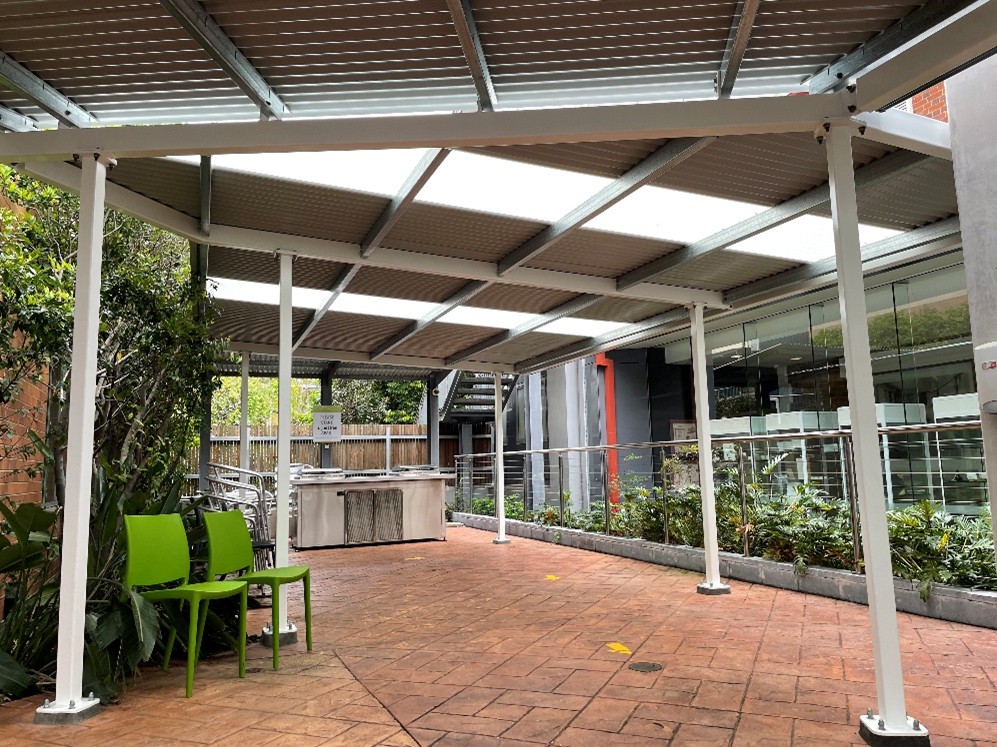
If you want the clarity of glass without the weight or the fragility, polycarbonate sheets for roofing are a top-tier choice. These are particularly effective for “outdoor rooms” where you want to maintain natural light while blocking 99% of harmful UV rays.
- Best for: Verandahs, commercial walkways, and carports.
- Expert Tip: Look for multi-wall polycarbonate. It provides an insulating air layer that keeps the area underneath significantly cooler than single-layer plastic.
2. Versatility Meets Protection: The All-Weather Shade Sail
Most people think of shade sails as simple mesh, but the all-weather shade sail has evolved. By using high-density polyethylene (HDPE) or PVC-coated polyesters, these structures provide a dual-purpose solution: maximum UV blockage and high wind resistance.
3. Total Dryness: The Waterproof Shade Sail
For those who want to entertain regardless of the forecast, a waterproof shade sail is the gold standard. Unlike standard sails that allow water to mist through, these are made from non-porous architectural fabrics.
Engineer’s Note: A waterproof sail requires precise engineering. Because water doesn’t pass through the fabric, “ponding” (water pooling) can occur if the tension and pitch aren’t calculated correctly. We ensure every fabric structure we install has the correct hypar (hyperbolic paraboloid) twist to shed water instantly.
4. Comparing Solutions: At a Glance
| Feature | Polycarbonate Roofing | Waterproof Shade Sail | Standard Shade Sail |
| Water Protection | 100% Waterproof | 100% Waterproof | Shower Resistant |
| Light Transmission | High to Transparent | Translucent | Filtered |
| Design Flexibility | Rigid/Fixed | Dynamic/Organic Curves | Dynamic/Organic Curves |
| Durability | 15+ Years | 10–15 Years | 8–12 Years |
Understanding Waterproof Shade Prices
One of the most common questions we hear is regarding waterproof shade prices. While a waterproof membrane is a higher initial investment than a standard mesh sail, the long-term value is significantly higher.
Prices typically vary based on:
- Steel Requirements: Waterproof fabrics catch more wind and hold more weight (water), requiring heavier-duty galvanized steel posts.
- Fabric Grade: Architectural-grade PVC vs. light-duty vinyl.
- Installation Complexity: The “pitch” required to ensure water run-off.
Why Trust Versatile Structures?
With decades of combined experience in Australian tension membrane architecture, we don’t just “hang a sail.” We engineer bespoke environments. Every fabric structure we design is wind-rated to local standards and built to withstand the unique salt and sun conditions of the coast.