
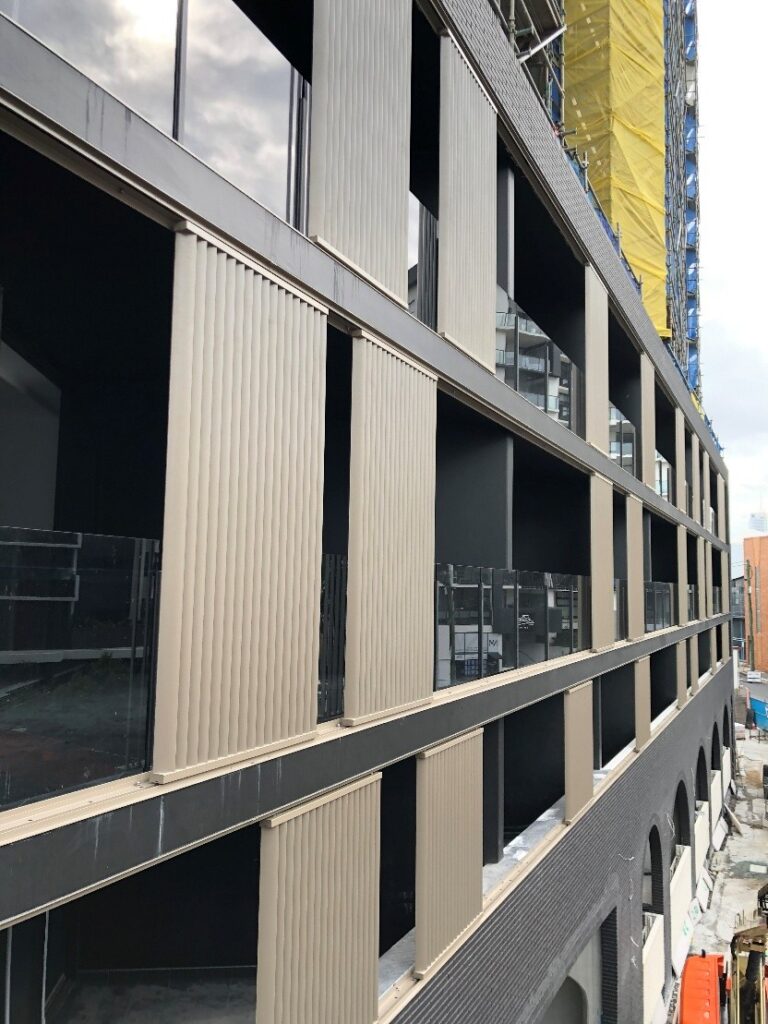
In modern Australian architecture, the boundary between indoor and outdoor spaces has become increasingly blurred. For architects and developers working in South East Queensland and across Australia, the challenge is no longer just about creating a functional structure; it is about creating a “sense of place” that protects occupants from a harsh climate without sacrificing the visual integrity of the design.
Integrating large-scale shade and tensile membrane structures into a commercial or public project is a high-stakes balancing act. It requires a harmony between the aesthetic intent—the architect’s vision of light, form, and shadow—and structural compliance, the rigorous engineering required to withstand Australia’s unique environmental loads.
This guide explores the critical considerations for architects when specifying integrated shade, ensuring that the final result is as durable as it is beautiful.
1. Moving Beyond the “Bolt-On” Mentality
Historically, shade was often treated as a secondary consideration—an “add-on” or “bolt-on” feature addressed late in the construction phase. However, to achieve true architectural synergy, shade must be integrated during the concept and schematic design stages.
When shade is integrated early, the structural supports can be harmonized with the building’s primary skeleton. This allows for:
- Hidden Fixings: Integrating attachment points into the structural steel or concrete of the primary building, reducing the need for unsightly secondary posts.
- Thermal Performance: Strategically placing membranes to reduce solar heat gain on glass facades, significantly lowering the building’s overall cooling load and improving its energy rating (NABERS/Green Star).
- Intentional Shadow Play: Using the translucency of materials like PTFE or PVC to create dynamic lighting environments that change throughout the day.
2. Material Science: Selecting the Right Substrate
The choice of fabric is perhaps the most critical decision in balancing aesthetics with performance. Not all membranes are created equal, and the “Expertise” lies in matching the material to the specific environmental stressors of the site.
- PTFE (Polytetrafluoroethylene): Often considered the “gold standard” for permanent structures. It is highly translucent, self-cleaning, and has a lifespan exceeding 30 years. From an aesthetic standpoint, PTFE starts with a slightly beige tone and bleaches to a brilliant, crisp white under UV exposure.
- PVC Polyester: A more flexible and cost-effective option, ideal for complex, curvaceous geometries. With modern PVDF lacquers, these membranes offer excellent dirt resistance and are available in a vast array of colours to match corporate branding or landscape palettes.
- High-Density Polyethylene (HDPE) Monofilament: Best for “breathable” shade. In public parks or school settings, HDPE allows hot air to rise through the fabric, creating a cooler ambient temperature beneath, though it does not provide 100% waterproof protection.
3. Navigating the Rigours of Australian Standards
In Australia, “near enough” is never good enough. Structural compliance is the bedrock of Trustworthiness in the construction industry. Any integrated shade structure must adhere to AS/NZS 1170 (Structural Design Actions) and AS 4174 (Knitted and Woven Shade Fabrics).
Wind Loads and Cyclonic Regions
Southeast Queensland and Northern Australia present a specific challenge: cyclonic wind speeds. An architect’s vision for a sweeping, lightweight “wing” must be tempered by the reality of uplift and downforce.
- Expert Insight: Engaging a specialist contractor who uses FEA (Finite Element Analysis) during the design phase is essential. This allows the architect to see exactly how the fabric will react under peak wind loads, ensuring the supporting steelwork is optimized—not over-engineered to the point of bulkiness, but not under-engineered to the point of failure.
UV-R Protection and Public Health
In a country with some of the highest skin cancer rates in the world, the “Expertise” of a shade provider is measured by their ability to provide certified UV-R protection. Compliance here isn’t just about shade; it’s about the “UVR Protection Category.” Architects should look for materials that offer “Effective Shielding” (97% + UV protection) to ensure the safety of the end-users.
4. The Engineering of Elegance: Minimalist Supports
The most common friction point between architects and engineers is the size of the support columns. An architect wants a “floating” appearance; an engineer wants stability.
To bridge this gap, Versatile Structures emphasizes Complete Project Ownership. By managing the fabrication of the steel in-house, we can utilize high-tensile materials and tapered column designs that maintain structural integrity while reducing the visual “weight” of the structure.
- Catenary Curves: Understanding the physics of the catenary curve allows for the tension to be distributed evenly through the fabric, reducing the stress on the corners and allowing for slimmer, more elegant hardware.
5. Compliance with WHS and Maintenance
Experience and Expertise extend into the life of the building after the ribbon-cutting. A structure that is impossible to clean or inspect is a liability.
Architects must consider:
- Access for Inspection: Ensuring that tensioning points are accessible for annual “tune-ups.”
- WHS Audits: Working with a provider who has a 100% WHS audit success rate ensures that the installation process doesn’t introduce risk to the broader site.
- Longevity and Warranties: Trust is built through transparency. Integrated shade structures should come with comprehensive warranties (often up to 15 years for premium fabrics) and a clear maintenance schedule.
6. Case Study in Authority: The Commercial Landmark
Consider the requirements for high-traffic environments like Pacific Fair Shopping Centre or Dreamworld. These projects demand more than just a shade provider; they demand a partner who understands the logistics of commercial delivery.
When an architect specifies a structure for a landmark location, they are putting their reputation on the line. Choosing a partner with a proven portfolio of Australian-made, engineered-to-order structures ensures that the “Aesthetic Intent” is never compromised by “Installation Incompetence.”
Conclusion: The Versatile Advantage
Designing for the Australian climate is an exercise in resilience. The most successful architectural projects are those where the shade is not an afterthought, but a defining feature of the building’s silhouette.
By leaning into the expertise of specialists who understand the intersection of fabric tension, steel fabrication, and Australian building codes, architects can push the boundaries of design. The result is a structure that offers world-class protection, meets every rigorous compliance standard, and stands as a testament to the power of integrated design.
About Versatile Structures: With over 40 years of combined experience and a commitment to Australian-made quality, Versatile Structures partners with architects and developers to deliver iconic tensile membrane solutions. From initial 3D conceptualization to final certification, we ensure your aesthetic intent is backed by unbreakable structural integrity