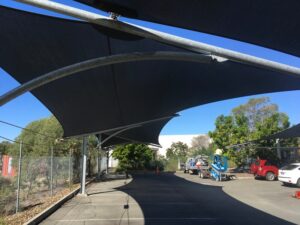
Car Park Shade Structures
YOU ARE HERE:
Car park Shade Structures are an ever-popular shade solution for providing protection from a multitude of external weather conditions. Our range of Car park shade structures is diverse, from skillion options to Barrel vault structures, we can incorporate walkways and lighting into your Car Park Shade Structure to ensure they can be utilized day or night. Below are just a few examples of options
Single Bay

Double Bay

Car park shade structures can add value to commercial properties by enhancing their functionality and aesthetics. They make parking areas more attractive and can be a selling point for businesses or residential complexes. Similarly, commercial shade structures provide additional benefits, such as creating comfortable outdoor spaces for customers, employees, or visitors, making them ideal for various commercial settings, including restaurants, cafes, parks, and recreational facilities.
Read more about a Double bay project – Stanthorpe Plaza
Double Bay with walkway

Full cover
Features and Installation
A full cover car park shade structure is ideal for longer stay carparks such as airports, or more exposed rooftop shopping centre carparks. We can customize the car park shade structure to meet council requirements providing full design and engineering for any council application. A Full Cover Carparks protect the whole parking aisle, both driveway and parking bays. Full Cover Carpark shade structures can be built side-by-side to cover entire parking lots. Versatile Structures can deliver a complete design and construction solution, including all Building approvals, engineering requirements, Project Management, Installation and commissioning of electrical aspects, in either Shade cloth or Waterproof PVC Membrane options. Let us know your specific requirements and we will advise how we can best assist you with your project.
Time frame
Car park shade structures are no different to any other building structures in that the same factors like weather and council approval can all impact the time frame. In our experience the average car park shade structure takes around 12 weeks to complete from when we first start talking about your project. To learn more about the process and how long each step takes read our article “How much time to allow for a custom shade structure project”
Fire protection
A car park shade structure has multiple functions like protect your patrons while getting in an out of their vehicles, it may even provide them with a walk way to your store but the key function of a car park shade structure is to provide protection for vehicles. Sadly though not all people value their vehicles which means they may not be up to date with their servicing or there is just a manufacturing defect that cause cars to spontaneously combust. (Search “cars catching fire” on Youtube to see how often it occurs.) So you want your car park shade structure to be as fire resistant as possible so your car park doesn’t become a fire inferno. Read more about shade structures and their fire performance.
Key benefits of our Car Park Shade Structures
- Complete Design and Construct Service.
- Engineered to specific site conditions.
- Wind ratings available for all regions including cyclonic.
- Standard design options allowing speedy delivery.
- Steel coatings to suit site specific conditions.
- Typical Lifespan 10-30 years.
Recommended applications
- Commercial Construction Projects
- Corporate office Parking
- Shopping Centre Car Park Shade
- Sporting Club Grand Stands
- School Parking Lots
Australian Made

Technical Deep Dive
Our Car shade Structures are proudly Australian made in Brisbane. We use the best materials possible to ensure durability.
Licensee ID number: 15969
Car park weather protection
Have you ever noticed a shopping centre being a little busier on a rainy day? Shopping centres generally have undercover parking which means that on raining days you aren’t running in the rain with a full trolley trying pack stuff in your boot. If your store has an open car park, a shade structure could significantly increase your foot traffic on rainy days. Even if there only a small uplift in sales on rainy days, it would easily pay for the cost of installing a car park shade structure within a twelve-month period. Shade smart guide To learn more about shade structures their various characteristics as well as the various substrates used go to the shade smart guide. The printable shade guide will help you decide on which solution is best for you.
Car park shade articles
The following articles answer various questions regarding car park shade structures
- Cantilever Parking Structure
- What to look for in a car park shade provider
- Commercial car park shade structures: the benefits of choosing Versatile Structures
- What to consider when selecting a car park shade structure in Brisbane
- The ins and outs of commercial car park shade structures
- Shade sails and structures for shopping centre car parks
- Benefits of a car park shade structure
- 8 Steps to creating the perfect car park shade sail in Brisbane
- More about Carpark Shade Structures
- Choose The Best Commercial Car Park Shade Solutions on the Gold Coast
Frequently Ask Questions
What materials are commonly used for car park shade structures in Australia?
Car park shade structures in Australia are typically made from high-quality steel frames and UV-stabilised shade fabrics, such as high-density polyethylene and monofilament. These materials are chosen for their durability, weather resistance, and ability to provide excellent sun protection.
How do car park shade structures benefit businesses and property owners?
Car park shade structures offer numerous benefits, including protecting vehicles from harsh sunlight and weather, reducing interior vehicle temperatures, and enhancing the overall aesthetics and functionality of the property. They also help to prolong the life of vehicle interiors and paintwork.
Are car park shade structures compliant with Australian standards?
Yes, reputable manufacturers ensure that their car park shade structures comply with all relevant Australian standards, including AS/NZS 1170 for structural design actions and AS/NZS 4399 for sun protection.
What are the typical maintenance requirements for car park shade structures?
Car park shade structures require minimal maintenance. Regular inspections to check for any damage or wear, occasional cleaning of the fabric to remove dirt and debris, and ensuring the tension of the fabric remains optimal are generally sufficient to keep the structures in good condition.
Can car park shade structures be customised to fit specific requirements?
Absolutely. Car park shade structures can be tailored to meet specific needs, including custom sizes, colours, and designs. They can also be designed to accommodate various site conditions and aesthetic preferences.
What is the typical lifespan of a car park shade structure?
The lifespan of a car park shade structure varies depending on the materials used and environmental conditions, but high-quality structures can last between 20 to 30 years with proper maintenance.
How does the installation process work for car park shade structures?
The installation process typically involves a site assessment, design and engineering approval, fabrication of the structure, and professional installation by experienced technicians. The entire process ensures the structure is securely anchored and meets all safety and compliance standards.
Are car park shade structures effective in reducing heat buildup in vehicles?
Yes, car park shade structures are highly effective in reducing heat buildup inside vehicles. They can significantly lower the temperature, making vehicles more comfortable and reducing the need for air conditioning, which can save on fuel consumption.
What factors should be considered when selecting a car park shade structure?
Key factors to consider include the size and layout of the parking area, local climate conditions, material durability, aesthetic preferences, and compliance with local regulations and standards. Consulting with a professional can help ensure all relevant factors are taken into account.
Do car park shade structures offer any environmental benefits?
Yes, car park shade structures offer several environmental benefits. By reducing the heat island effect in urban areas, they contribute to lower overall temperatures. Additionally, by protecting vehicles from direct sunlight, they reduce the need for air conditioning, leading to lower greenhouse gas emissions.
What are the benefits of car park shade structures
Car park shade structures, also known as parking lot shade structures or carport canopies, offer numerous benefits to both vehicle owners and property owners or managers. Here are some of the key benefits:
Protection from Sunlight: One of the primary benefits of car park shade structures is the protection they offer from the sun. This helps prevent the vehicle’s paint, dashboard, and interior from fading due to prolonged sun exposure. It also keeps the car’s interior cooler, making it more comfortable when entering on hot days.
UV Radiation Reduction: Shade structures block harmful ultraviolet (UV) radiation, which can damage a vehicle’s paint and cause it to deteriorate over time. This protection extends the lifespan of the vehicle’s exterior.
Heat Reduction: Shade structures reduce the interior temperature of parked vehicles, making them more comfortable to enter, especially during hot weather. This can also help lower the use of air conditioning, saving energy and fuel.
Extended Vehicle Lifespan: By protecting vehicles from the sun and harsh weather conditions, shade structures can extend the overall lifespan of the vehicles, reducing maintenance and replacement costs.
Improved Safety: Shaded parking areas can enhance safety for both pedestrians and drivers. Reduced sun glare improves visibility, reducing the risk of accidents. In addition, shaded parking areas can help prevent overheating and discomfort for passengers, reducing the chances of heat-related illnesses.
Increased Property Value: Car park shade structures can add value to commercial properties by enhancing their functionality and aesthetics. They make parking areas more attractive and can be a selling point for businesses or residential complexes.
Customer and Tenant Satisfaction: Businesses and residential complexes that provide shaded parking demonstrate consideration for their customers or tenants, leading to higher satisfaction levels.
Energy Savings: Shaded parking can reduce the need for air conditioning in vehicles, which in turn saves fuel and reduces greenhouse gas emissions. Additionally, providing shade over building exteriors can lower cooling costs and reduce overall energy consumption.
Marketing and Branding: Shade structures can be customised with logos, messages, or branding elements, serving as a visible marketing tool for businesses.
Versatility: Car park shade structures come in various designs and configurations to suit different needs and spaces. They can be standalone structures or integrated with existing buildings.
Weather Protection: In addition to sun protection, some shade structures also provide shelter from light rain and snow, offering added convenience to users.
Regulatory Compliance: In some areas, providing shaded parking may be required by local regulations or building codes, and installing shade structures ensures compliance with these requirements.
Overall, car park shade structures offer a range of benefits, including protection from the elements, energy savings, improved safety, enhanced property value, and increased customer or tenant satisfaction. Similarly, commercial shade sails provide versatile and aesthetic solutions, offering significant coverage and durability for various outdoor spaces.
What are car park shade structures?
Car park shade structures are engineered coverings typically installed above parking lots. They protect vehicles and pedestrians from environmental elements—especially in harsh Australian climates—by combining functional engineering with aesthetic design. These structures can be custom-designed in various formats—such as single- or multi-bay, cantilevered, or post-mounted—and utilize materials tailored for durability and performance. Some integrate advanced features like lighting, walkways, or even solar panels for enhanced utility and visual appeal.
Why should I install shade structures in a car park?
- Protection from the elements: They shield vehicles from intense solar radiation, UV rays, rain, hail, wind, and even dust—helping prevent damage and keeping vehicles in better condition.
- Enhanced driver comfort: Lower interior temperatures mean more comfortable entry and exit, without the hazard of scorching steering wheels or black-hot seats.
- Vehicle longevity: Shade reduces fading, cracking, and material deterioration in vehicle exteriors and interiors, preserving the car’s resale value and aesthetics.
- Air conditioning savings: Cooler interiors at the onset reduce reliance on AC to cool down, leading to energy and fuel savings—plus lower carbon emissions.
- Improved aesthetics & customer experience: Well-designed shade structures elevate the appearance of your car park, making it more visually appealing and user-friendly—especially in retail environments, encouraging shoppers to stay longer.
- Sustainability: Shade structures help mitigate “urban heat island” effects, lower the heat radiating from large carpark surfaces, and can even integrate solar panels to contribute renewable energy, aligning with sustainable and green-building practices.
What materials are used for car park shade structures?
- Australian-made steel (often hot-dip galvanized) and aluminium provide strength and long-term stability, engineered to meet local building codes.
- 2-pac paint coatings and HDG (hot-dip galvanizing) treatments offer corrosion protection and aesthetic finish.
- High-Density Polyethylene (HDPE): Durable, UV-stabilised, with customizable shade levels—excellent for ventilated shade.
- PVC Fabric: Heavy-duty, waterproof, and easy to clean—ideal for rain-prone or permanent installations.
- PVC Mesh: Offers UV protection while allowing airflow and visibility.
- PTFE (Teflon): Highly durable and weather-resistant; used in architecturally significant or long-term installations.
- Acrylic Fabric: Known for vivid colours and aesthetic appeal; UV- and mould-resistant with moderate protection.
- Mesh Fabrics (e.g., Monotec 370): Excellent airflow, UV protection, and very resilient—used in projects like the Woolworths Logan Reserve carpark, mounted with reinforced edges and durable hardware for maximum longevity.
- Marine-grade stainless steel components, reinforced stitching, and robust edge reinforcements enhance structural integrity and lifespan.
- Designs often include features like custom reinforcement cages (REO cages), adherence to safety protocols, and provisions for future enhancements such as lighting.
Car Park Shade Structures: Design, Approvals, Costs and FAQs
Which car park shade layout suits my site?
Start with why you are adding shade. If staff complain about hot cars, a bay cover may be enough, but if customers get wet walking to your door, a double bay with walkway in waterproof fabric solves the real problem. The common layouts are single bay (one row of cars, suited to smaller properties), double bay (two rows, cost-effective for larger areas), double bay with walkway, and full cover over bays and driveways.
Cantilever designs save space and keep pillars out of the way, and barrel vault, skillion, flat top, V type and rolled hoop styles can be matched to the look of your building.
Should I choose shade cloth or a waterproof fabric?
Knitted HDPE shade cloth blocks most UV while letting air through, which reduces heat build-up and wind lift. Waterproof PVC keeps people and cars dry but costs more: wind cannot pass through, so the frame carries more load and needs deeper footings, more engineering and offers fewer colours. Waterproof covers also need sloped surfaces or gutters to carry water away. PVC mesh, PTFE and acrylic suit projects where light, durability or colour matter most. Fire-performance fabrics are also available. See our waterproof shade structures for rain cover options.
Do car park shade structures need council approval in Queensland?
It depends on the design, size and placement of the structure and your council zoning. Car park shades are generally treated as Class 10a outbuildings, either acceptable or assessable development. Planning permission may be needed if the site is heritage listed, in a priority development zone, if the structure is very large, or if it sits closer to the street than the building. Skipping approval can lead to fines and removal, so choose a supplier that handles approvals, certification and engineering. Depending on rain and approvals, projects typically take around 12 weeks.
How are car park shades engineered for Brisbane storms?
Brisbane’s storm season runs roughly from October to February, bringing thunderstorms, East Coast Lows and occasional tropical cyclones. Each structure should be engineered to the wind region and terrain category for the site under AS/NZS 1170.2, with footings designed for the actual soil conditions. We recommend an independent service locator before excavation.
Sails work best as a four-corner hypar (hyperbolic paraboloid), which keeps the fabric tensioned; flat three-sided sails flap more. Sail edges are cut with a curved catenary, set at 8% of the edge length, so the fabric does not sag, work loose or fatigue early.
Which steel coating should I choose?
Hot dip galvanising is durable and cost effective, with warranties commonly from 5 to 25 years, but has a dull grey finish. Powdercoat adds colour; insist on at least a Class 2.5 blast and primer first, as some systems carry up to 10 years’ warranty on steel and 25 on aluminium. 2 Pac paint over a Class 3 blast offers any PMS colour, with warranties generally 5 to 15 years. Galvanising plus 2 Pac is often used on coastal council projects. Fabric fixings should limit penetrations into the steel to reduce corrosion.
How high and how wide should the structure be?
Shade structures need to be wider than the area they shade, and lower generally gives more shade. Clearance is usually between 2.4 m and 2.8 m, or higher in rural areas or where large vehicles enter. Clearance height indicators, signage and traffic management help prevent vehicle strikes. Plan for the sun’s path: morning shadows fall to the west, midday shade sits directly underneath and afternoon shadows fall to the east, with the summer sun higher overhead than in winter.
What does a car park shade structure cost to install and maintain?
As a guide, installation typically ranges from $1,000 to $3,000 per parking space, depending on the size of the car park, materials and design complexity, plus site preparation, permits and custom design. Upkeep is usually light: occasional fabric cleaning and tension adjustments, with annual maintenance typically $100 to $500 per space depending on materials and exposure. A well-made structure should last 10 to 20 years or more. Commercial structures cost more than residential ones because they are larger and use more durable fabrics.
What extras and supplier checks should I consider?
- Extras: lighting for night-time security, covered walkways, solar panel roofs that generate power for the site, EV charging, rainwater harvesting and branded fabric in your colours or logo.
- Supplier: look for more than 10 years in the industry, in-house design, engineering, installation and after care, stitching and fittings made to Australian standards, rust-proof hardware, and fabric from proven brands such as Serge Ferrari, Mehler Texnologies, Rainbow Shade, Extreme 32 and Gale Pacific.
Planning a car park shade project? Request a quote and our team will visit your site and design a structure to suit.