In the intense climate of Brisbane, the Gold Coast, and Noosa, outdoor spaces are only as valuable as they are comfortable. For businesses, a well-designed shade structure is more than a shelter—it is a strategic asset that increases customer stay time, protects assets, and drives revenue.
From retail centers to childcare facilities, investing in “Queensland-ready” shading is essential for long-term success.
1. Driving Foot Traffic and Customer Comfort
Comfortable customers stay longer and spend more. By mitigating heat and UV exposure, businesses can transform underutilized outdoor areas into high-value zones.
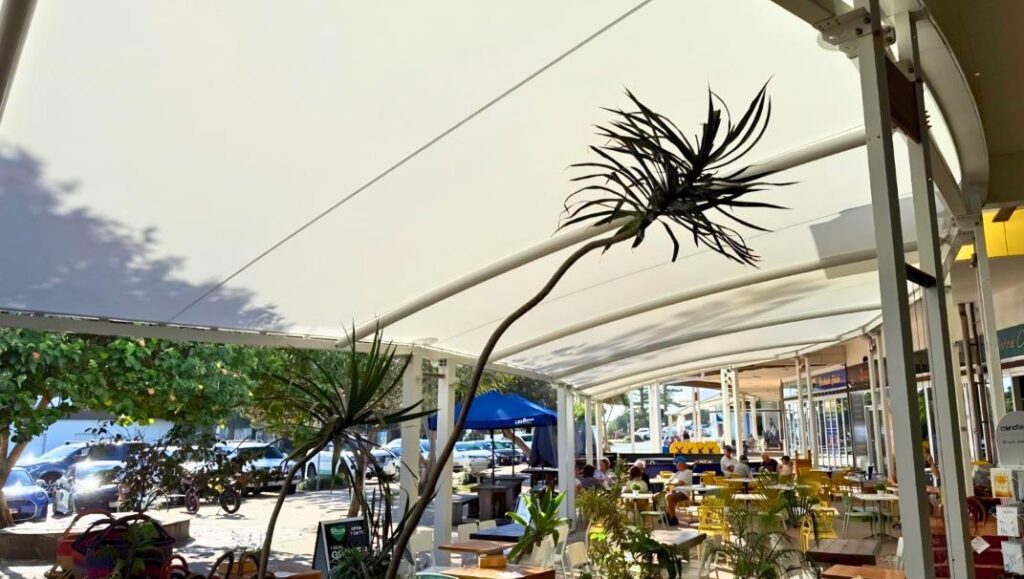
- Hospitality: For cafes and restaurants, shade structures are mandatory for year-round outdoor dining, effectively increasing seating capacity and turnover.
- Public Spaces: Parks and playgrounds that offer high-quality shade see significantly higher visitor numbers and longer stay durations.
- Markets: Shaded outdoor markets provide relief for both stallholders and shoppers, ensuring steady foot traffic even during the hottest hours.
2. Elevating the Retail & Commercial Experience
The modern shopper expects a premium environment from the moment they arrive.
- Car Park Shading: Providing a cool car park is a major competitive advantage. It protects vehicles from sun damage and ensures customers enter the store in a better mood.
- Walkway Protection: Shaded pathways and entrances create a seamless, professional experience between the car and the storefront.
- Residential Developments: Developers now include architectural shade in master-planned communities to increase property value and “liveability.”
3. Safety & Compliance for Community Facilities
In Queensland, UV protection is a critical health requirement.
- Schools & Childcare: Compliant, engineered shade is vital for protecting children during outdoor play and learning.
- Government Buildings: Civic sites require shade that blends with existing architecture while meeting strict safety and accessibility standards.
- Coastal Environments: In Noosa and the Gold Coast, shade structures must be specifically engineered to resist salt corrosion and high-wind coastal conditions.
4. Design Meets Functionality: Architectural Shade
Modern businesses are moving away from “basic” covers toward architectural shade structures. These use advanced geometry and premium fabrics to create sculptural landmarks.
- Rooftop Spaces: With the rise of rooftop bars and terraces, custom shade allows for all-weather operation without sacrificing the view.
- Aesthetic Branding: Custom colors and steelwork can be used to reinforce a brand’s visual identity.
5. The Importance of Engineering and Materials
A shade structure is only as good as its engineering. In Queensland, structures must handle extreme UV, torrential rain, and cyclonic wind loads.
- Fabric Selection: Options range from UV-rated HDPE to waterproof PVC and PTFE membranes. Waterproof designs are essential for businesses that want to operate during summer storms.
- Fire Resistance: Commercial structures must meet strict Australian fire safety standards.
- Structural Engineering: Professional engineering ensures secure footings, stable tensioning, and full compliance with local building codes.
6. Sustainability and Future Trends
Eco-conscious businesses are increasingly choosing sustainable shading systems. These help lower the “urban heat island” effect and reduce the energy needed to cool adjacent buildings.
- Long-Life Materials: High-quality steel and recyclable fabrics reduce the need for frequent replacements.
- Climate Resilience: Designing structures that can adapt to increasingly unpredictable weather patterns.
Conclusion: A Smart Long-Term Investment
Whether you are managing a shopping center, a government building, or a local café, the right shade structure is an investment in your infrastructure. By choosing professional installation and high-quality materials, you ensure a safe, attractive, and profitable outdoor environment for years to come.