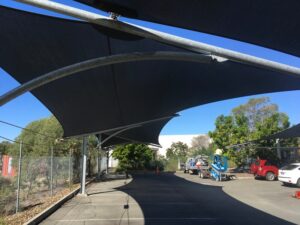
Car park Shade Structures are an ever-popular shade solution for providing protection from a multitude of external weather conditions. Our range of Car park shade structures is diverse, from skillion options to Barrel vault structures, we can incorporate walkways and lighting into your Car Park Shade Structure to ensure they can be utilized day or night. Below are just a few examples of options
Single Bay
 A Single Bay Carpark shade structure will protects a single row of vehicles, however as can be seen above these cars still get morning sun. The above shade structure was set-up to protect against rain and hail This shade structure is ideal for smaller commercial property carparks or combined with a Double Bay Carpark shades to accommodate the outer edges of a retail parking area.
Double Bay
 The Double Bay Carpark shade utilises an arch to accommodate two rows of parked cars. The Double Bay design provides a very cost effective shade structure that covers a large area. Generally, a Double Bay solution is used to cover large areas such as carpark shade cover for shopping centres. We can use various fabrics to meet your needs of shade protection, waterproof Shade Sails, as well as incorporating lighting to ensure there is good visibility in your car park.
Car park shade structures can add value to commercial properties by enhancing their functionality and aesthetics. They make parking areas more attractive and can be a selling point for businesses or residential complexes. Similarly, commercial shade structures provide additional benefits, such as creating comfortable outdoor spaces for customers, employees, or visitors, making them ideal for various commercial settings, including restaurants, cafes, parks, and recreational facilities.
Read more about a Double bay project – Stanthorpe Plaza
Double Bay with walkway
 We can include a walkway between the parking bays to protect your customers from rain and the hot sun as they move between their car and your store. Walk ways also help reduce car park congestion as pedestrians have dedicated walk ways that are safer to utilize. This design is popular when tied into primary shopping centre egress routes.
Full cover

Features and Installation
A full cover car park shade structure is ideal for longer stay carparks such as airports, or more exposed rooftop shopping centre carparks. We can customize the car park shade structure to meet council requirements providing full design and engineering for any council application. A Full Cover Carparks protect the whole parking aisle, both driveway and parking bays. Full Cover Carpark shade structures can be built side-by-side to cover entire parking lots. Versatile Structures can deliver a complete design and construction solution, including all Building approvals, engineering requirements, Project Management, Installation and commissioning of electrical aspects, in either Shade cloth or Waterproof PVC Membrane options. Let us know your specific requirements and we will advise how we can best assist you with your project.
Time frame
Car park shade structures are no different to any other building structures in that the same factors like weather and council approval can all impact the time frame. In our experience the average car park shade structure takes around 12 weeks to complete from when we first start talking about your project. To learn more about the process and how long each step takes read our article “How much time to allow for a custom shade structure project”
Fire protection
A car park shade structure has multiple functions like protect your patrons while getting in an out of their vehicles, it may even provide them with a walk way to your store but the key function of a car park shade structure is to provide protection for vehicles. Sadly though not all people value their vehicles which means they may not be up to date with their servicing or there is just a manufacturing defect that cause cars to spontaneously combust. (Search “cars catching fire” on Youtube to see how often it occurs.) So you want your car park shade structure to be as fire resistant as possible so your car park doesn’t become a fire inferno. Read more about shade structures and their fire performance.
Key benefits of our Car Park Shade Structures
- Complete Design and Construct Service.
- Engineered to specific site conditions.
- Wind ratings available for all regions including cyclonic.
- Standard design options allowing speedy delivery.
- Steel coatings to suit site specific conditions.
- Typical Lifespan 10-30 years.
Recommended applications
- Commercial Construction Projects
- Corporate office Parking
- Shopping Centre Car Park Shade
- Sporting Club Grand Stands
- School Parking Lots
Australian Made


Technical Deep Dive
Our Car shade Structures are proudly Australian made in Brisbane. We use the best materials possible to ensure durability.
Licensee ID number: 15969
Car park weather protection
Have you ever noticed a shopping centre being a little busier on a rainy day? Shopping centres generally have undercover parking which means that on raining days you aren’t running in the rain with a full trolley trying pack stuff in your boot. If your store has an open car park, a shade structure could significantly increase your foot traffic on rainy days. Even if there only a small uplift in sales on rainy days, it would easily pay for the cost of installing a car park shade structure within a twelve-month period. Shade smart guide To learn more about shade structures their various characteristics as well as the various substrates used go to the shade smart guide. The printable shade guide will help you decide on which solution is best for you.
Car park shade articles
The following articles answer various questions regarding car park shade structures
- Cantilever Parking Structure
- What to look for in a car park shade provider
- Commercial car park shade structures: the benefits of choosing Versatile Structures
- What to consider when selecting a car park shade structure in Brisbane
- The ins and outs of commercial car park shade structures
- Shade sails and structures for shopping centre car parks
- Benefits of a car park shade structure
- 8 Steps to creating the perfect car park shade sail in Brisbane
- More about Carpark Shade Structures
- Choose The Best Commercial Car Park Shade Solutions on the Gold Coast