The Australian climate, particularly in high-sun regions like Queensland, presents a significant challenge to modern architectural design: how to create a visually striking, transparent building that remains cool and energy-efficient. In an era where sustainability is not just a preference but a regulatory necessity, relying solely on mechanical cooling systems is inefficient, costly, and environmentally irresponsible.
The solution lies in passive cooling—the strategic use of architectural elements to manage the sun’s energy before it even enters the building envelope. Two of the most effective and aesthetically versatile tools in an architect’s passive design toolkit are aluminium screens and sunhoods. These elements, designed and fabricated by experts like Versatile Structures, are not merely decorative features; they are highly engineered systems critical to achieving ambitious 6-Star Green Ratings and meeting stringent energy efficiency standards.
The Imperative: Why Passive Cooling is No Longer Optional in Australian Design
For architects and developers involved in commercial projects, compliance with nationally recognised standards like NABERS (National Australian Built Environment Rating System) and the Green Star certification framework is paramount. These rating systems place a heavy emphasis on reducing a building’s operational energy consumption.
The single biggest contributor to unwanted energy load in a commercial building is solar heat gain. When direct sunlight penetrates glass windows, it converts into heat, which the air conditioning system then must work overtime to remove.
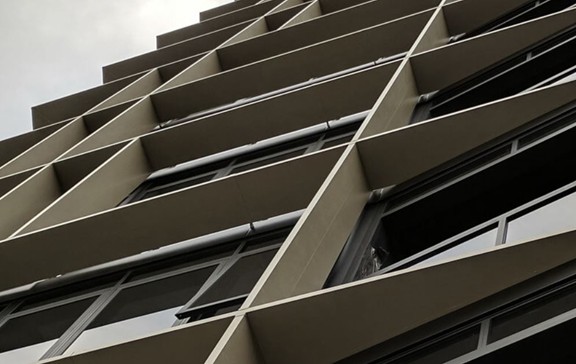
The core principle of passive design is to stop this heat at the facade. This is where high-quality architectural shading systems shine. By strategically placing custom sunhoods and screens over glass areas, you can block up to 90% of the sun’s direct summer radiation, dramatically lowering the indoor temperature and consequently slashing the demand on active cooling systems. The result is a more comfortable building for occupants, a smaller carbon footprint, and a demonstrable reduction in operational costs—a powerful trifecta that appeals to both developers and tenants. If you are looking for a reputable commercial shade structure operator, experience and knowledge in this domain are essential.
Beyond Aesthetics: The Science of Solar Heat Gain Control
To qualify as a genuine passive cooling component, a shading solution must be precision-engineered. Architects must consider two key scientific metrics when selecting shading for a project:
- Solar Heat Gain Coefficient (SHGC)
The SHGC measures how much solar radiation passes through a window and is converted into heat. A low SHGC is ideal. While high-performance glass can help, external shading is the most effective way to lower the overall SHGC of the facade system. An accurately modelled sunhood will be designed specifically for the latitude and orientation of the building, ensuring maximum protection during peak sun hours in summer while still allowing lower-angle winter sun to penetrate and provide warmth and light.
- Visible Light Transmittance (VLT)
Unlike dark films or internal blinds that can make interiors gloomy, well-designed aluminium sunhoods and aluminium screens manage to reduce heat while maintaining natural light. They are often louvred or battened to allow indirect, diffused daylight to enter, preserving crucial VLT. This is vital for occupant well-being and allows the building to qualify for credits related to natural lighting within sustainability ratings. Versatile Structures specialises in customised solutions that achieve this delicate balance, as demonstrated in projects like Peppers Kingscliff, ensuring that the screens are designed to suit individual requirements and architectural intent.
The Material Advantage: Architectural Aluminium
Aluminium is the ideal material for high-performance external shading. The category of Architectural Aluminium products offers distinct advantages:
- Lightweight and Strong: It can span large areas with minimal structural support.
- Corrosion Resistance: Crucial for coastal Australian environments, aluminium requires less intensive coating than steel, simplifying maintenance.
- Customisation: Aluminium can be easily fabricated into complex shapes, including custom louvres, fins, and unique sunhood profiles, offering architects infinite design possibilities. Consider how this flexibility benefits various applications, from car park shade structures to subtle awnings and blinds.
From Design Concept to Certification: Integrating Aluminium into Your 6-Star Strategy
For a commercial project to achieve a coveted 6-Star Green Star rating—representing “World Leadership” in sustainable building—every component must be carefully justified. Aluminium screens and sunhoods are typically integrated into the following Green Star categories:
- Energy Performance: By significantly reducing the HVAC load, these systems provide quantifiable savings that directly contribute to the Energy rating component.
- Indoor Environment Quality (IEQ): The ability to harvest natural daylight while controlling glare and heat improves the IEQ for occupants.
- Materials: Choosing a regional fabricator like Versatile Structures, who is officially licensed by the Australian Made Campaign Limited, can contribute to the ‘Materials’ credits related to responsible sourcing and supply chain transparency, often reflecting excellence awards and a commitment to quality.
When planning the integration of these features, it is vital to partner with a specialist who understands the engineering and compliance requirements, including wind ratings and council approvals. Versatile Structures provides an end-to-end service, from initial design consultation to geotechnical investigations and full council approval processes, streamlining the pathway to final certification. We ensure all architectural products are precisely engineered to specific site conditions and fabricated to exact design specifications. For businesses, especially in hospitality, these details are critical for long-term viability.
Versatile Structures: Your Partner in Compliant and Custom Architectural Shading
With a focus on South East Queensland and a national reach for commercial roll-outs, Versatile Structures provides custom commercial and domestic shade structures, including high-quality aluminium screens and sunhoods.
Our commitment to quality means we utilize only the highest grade materials and leverage decades of combined director experience in design, engineering, and fabrication. By choosing a genuine Australian Made solution, you are investing in a product that is not only built to withstand the harsh Australian environment but is also backed by clear warranties and transparent quality control.
We are not just manufacturers; we are problem-solvers who specialise in creating unique, customised solutions that meet specific architectural needs, whether for a large-scale project example like Bunnings Bundamba or a niche architectural structure.
The modern Australian building cannot afford to be passive in the face of the sun. It must actively manage solar energy to be compliant, sustainable, and profitable. Aluminium screens and sunhoods represent the pinnacle of this active-passive strategy, delivering performance that supports a 6-Star Green Rating, reduces energy bills, and enhances the overall built environment.
Ready to integrate a high-performance architectural shading solution into your next project? Review our project gallery and then get in touch with our expert team today to discuss your vision and compliance requirements. We provide clarity and transparency from the first enquiry to project handover.