
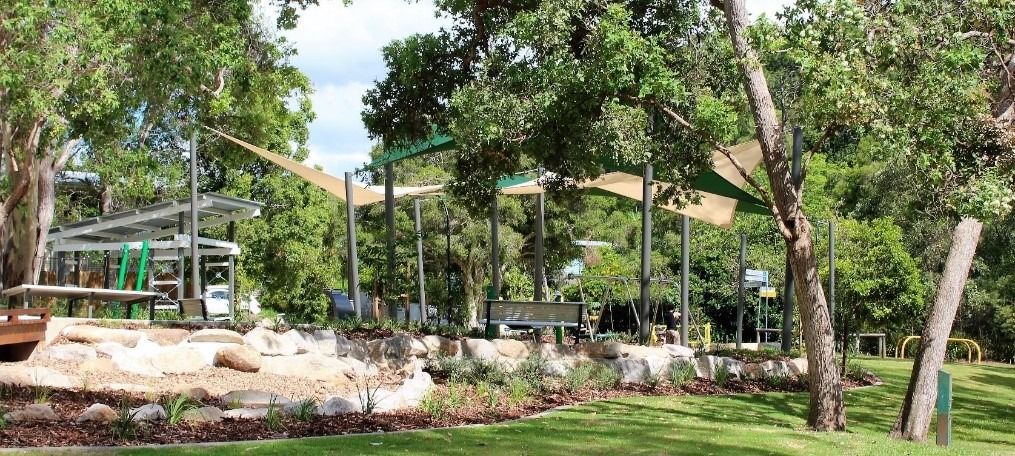
This is a compelling look at how infrastructure can drive environmental goals. To make this content more readable for architects, developers, and council planners, I have restructured it into a strategic framework focusing on the four pillars of sustainable landscaping.
Sustainable Landscaping: The Strategic Role of Shade Structures
In modern commercial design, sustainability is no longer just a trend—it is a cornerstone. For Queensland’s sun-drenched climate, shade structures are essential tools that marry architectural form with ecological function.
1. Mitigating the Urban Heat Island (UHI) Effect
Urban centers like Brisbane and the Gold Coast suffer from UHIs, where concrete and asphalt absorb and radiate heat, making city temperatures significantly higher than rural areas.
- Surface Cooling: By shading parking lots and walkways, these structures prevent solar heat absorption, lowering ambient temperatures.
- Reduced Emissions: Lowering the local temperature reduces the “heat load” on surrounding buildings, cutting the energy required for mechanical cooling.
2. Driving Passive Energy Efficiency
Strategic shading serves as a passive cooling system. By limiting direct sunlight on walls, windows, and entrances, businesses can achieve measurable energy savings.
- Shielding the Envelope: A canopy over a building’s entrance acts as a thermal barrier, reducing the work air conditioning systems must perform.
- Green Certifications: Properties integrating these solutions are better positioned to achieve high LEED or NABERS sustainability ratings, increasing asset value and tenant appeal.
3. The Shift to Eco-Friendly Materials
The sustainability of a structure is defined by its “embodied energy”—the environmental cost of its materials. Modern installations prioritize a low footprint:
| Material Type | Sustainability Benefit |
| Recycled Metals | Utilizing recycled steel or aluminum reduces mining demand and manufacturing energy. |
| FSC-Certified Timber | Ensures wood is sourced from responsibly managed forests that prioritize reforestation. |
| Recycled Fabrics | High-performance shade sails are now being crafted from recycled plastics, supporting a circular economy. |
4. Supporting Biodiversity & Urban Ecology
Shade structures do more than block the sun; they create microclimates that allow life to thrive in otherwise harsh urban environments.
- Vertical Gardens: Integrating shade sails with green walls improves air quality and provides a habitat for local birds and insects.
- Stormwater Management: Shade designs can be paired with rain gardens or permeable surfaces to manage runoff, mimicking natural water cycles.
- Native Flora: Shaded zones allow for a wider variety of native Queensland plants that might otherwise perish in full, direct sun.
Conclusion: Building for a Greener Queensland
For commercial developers and councils, shade structures are a high-impact investment. They offer a rare “triple win”: improving user comfort, reducing operational costs, and protecting the natural environment.
By choosing sustainable materials and intelligent, tech-driven designs, Queensland’s commercial sector can lead the way in creating resilient, eco-friendly urban landscapes for the future.