

Queensland sunlight is intense. Protecting students and young children from harmful UV rays is a top priority for educational leaders. However, designing effective shade for schools and early childhood centres involves more than standard shade sails.
Facility managers, principals, and project coordinators must navigate strict Australian Standards, local council approvals, and extreme weather resilience. Meeting compliance standards ensures student safety and long-term asset value.
This comprehensive guide breaks down the essential compliance requirements, structural standards, and design strategies for shade infrastructure in Queensland schools and childcare facilities.
Understanding AS 4174: The Australian Standard for Shade Fabrics
The foundational standard for any educational shade installation in Australia is AS 4174:2018 (Knitted and Woven Shade Fabrics). This standard classifies synthetic shade fabrics based on their performance and UV protection capabilities.
When selecting materials for school assembly areas, playgrounds, or sports courts, understanding these classifications is crucial:
- Ultraviolet Radiation (UVR) Block: Measures the percentage of harmful UV radiation blocked by the fabric.
- Ultraviolet Protection Factor (UPF): Evaluates overall skin protection, similar to sunscreen ratings.
- Shade Factor: Indicates the percentage of visible light blocked by the material.
Queensland Department of Education guidelines recommend shade fabrics offering a minimum of 90% to 95%+ UVR protection for high-use outdoor spaces.
Comparison: Common School Shade Materials
| Feature / Metric | Commercial Grade Shade Cloth | Heavy-Duty PVC Tension Membrane | Architectural Polycarbonate |
| Primary Function | High UVR shade & ventilation | 100% Waterproof shade & cover | Permanent light-transmitting shelter |
| UVR Block | 90% – 98% | 100% | 99% |
| Waterproofing | Breathable / Permeable | Completely Waterproof | Completely Waterproof |
| Wind & Hail Resistance | Moderate (Flexible) | High (Tensioned) | Exceptional (Impact-Resistant) |
| Ideal Application | Playgrounds & sandpits | Outdoor learning & assembly bays | Covered walkways & entryways |
For complex projects requiring custom engineering, exploring our range of architectural shade structures provides tailored solutions suited to Queensland climates.
Key Compliance Requirements for SE Queensland Educational Facilities
Creating compliant shade spaces requires balancing structural engineering, child safety, and site conditions.
1. Structural Wind Load Ratings (AS/NZS 1170.2)
South East Queensland faces severe storm seasons, tropical low pressure systems, and sub-tropical gale force winds. All commercial shade posts and framework must be engineered according to regional wind speeds:
- Region B1 Compliance: Standard structural rating required for inland Sunshine Coast, Brisbane, and Ipswich regions.
- Region C (Cyclonic Considerations): Coastal exposure zones require upgraded footing depths, heavier steel wall thickness, and reinforced fixing hardware.
2. Fall Heights and Softfall Impact Distances
When positioning shade posts near play equipment, strict clearance distances must be maintained:
- Posts must sit outside the certified impact fall zone of playground gear.
- Padded post protectors are mandatory on steel uprights located near active play areas.
- Structural footings must be poured below the required sub-grade level to prevent exposed concrete edges.
3. All-Weather Usability & Waterproofing
Standard mesh shade cloth keeps play equipment cool during peak noon heat. However, it offers zero protection during sudden coastal rain showers.
Installing 100% waterproof structures—such as tensioned PVC membranes or structural steel shelters—allows outdoor learning environments to function year-round. Learn more about our specialized commercial car park shade structures to see how waterproof engineering protects large footprint areas.
Recommended Shade Layouts for School Campuses
Different campus areas require specific architectural designs to maximize airflow, UV protection, and clear supervision lines.
Early Childhood Play Pits & Sandpits: High-tension shade sails using breathable commercial cloth. These allow hot air to escape while providing over 95% UVR protection.
Image alt text – Queensland school outdoor learning environment design featuring shade sail system, sports court pavilion, and waterproof canopy layouts
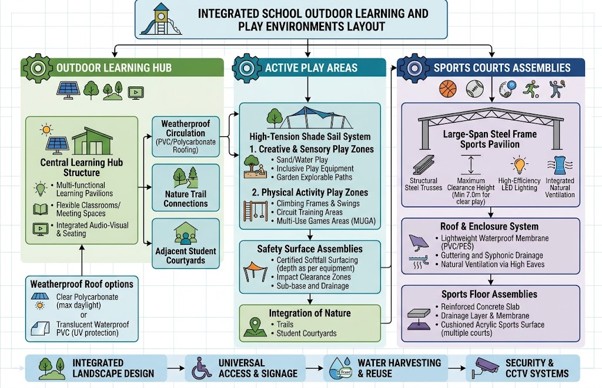
- Covered Outdoor Learning Areas (COLAs): Structural steel frames with tensioned PVC or solid roofing. These create dry, sun-safe spaces for outdoor assemblies, lunch seating, and physical education.
- Walkways & Drop-off Zones: Cantilevered shade structures or curved linear canopies. They keep students dry between classrooms without cluttering foot traffic paths with vertical posts.
Step-by-Step Compliance Checklist for Facility Managers
Use this step-by-step checklist when planning new shade infrastructure for your school or childcare facility:
- Conduct a Sun Shadow Audit: Track shadow movements during morning tea and lunch hours across autumn, winter, and summer seasons.
- Verify Fabric Certification: Request test results from the supplier confirming AS 4174 compliance and fire retardancy ratings.
- Confirm Engineering Certification: Ensure all structural drawings are signed off by a certified Queensland RPEQ engineer.
- Check Council & Building Approvals: Confirm whether your project requires a Form 15/Form 12 building certification or local council clearance.
- Schedule Maintenance Protocols: Set up regular inspections for tension adjustments, structural weld checks, and organic debris removal. Refer to our detailed shade structure maintenance guide for step-by-step servicing advice.
Frequently Asked Questions
What is the minimum UV protection required for school shade sails in Queensland?
Queensland educational guidelines recommend shade materials that provide a minimum of 90% to 95%+ UVR block. High-grade commercial shade cloth and PVC membranes routinely deliver between 95% and 99% UVR protection to ensure maximum safety for students.
Do school shade structures require council or building approval in Queensland?
Yes. Commercial shade structures built over a certain footprint require structural engineering sign-off (RPEQ certification) and building approval. A certified builder handles these approvals, issuing Form 15 and Form 12 documentation to confirm compliance with Queensland building codes.
How often should school shade sails be inspected and serviced?
Commercial shade sails should undergo formal maintenance inspections at least once a year. Regular servicing includes checking cable tension, inspecting perimeter stitching, examining steel post footings, and clearing accumulated leaves or debris to prevent fabric sagging and structural strain.
What is the difference between shade cloth and PVC tension membranes for childcare centres?
Shade cloth is a knitted, porous fabric designed to block UV rays while letting air flow freely. PVC tension membrane is a solid, completely waterproof material. Shade cloth works best overactive play pits, whereas PVC membranes provide all-weather cover for outdoor learning spaces and walkways.
Can existing school shade structures be upgraded to waterproof materials?
Upgrading from standard shade cloth to a waterproof membrane requires evaluating the existing support posts and footings. Waterproof materials capture significantly higher wind and rain loads. An engineering assessment will determine whether current steel posts can support a waterproof canopy or if structural upgrades are needed.