
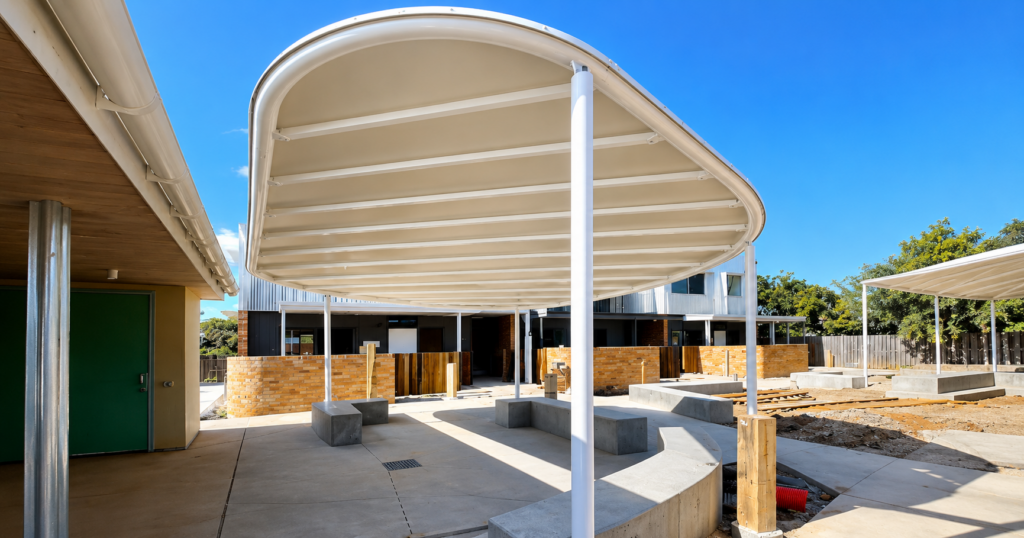
Commercial property development is facing a modern crisis. Urban areas are getting hotter. As concrete and asphalt replace natural landscapes, cities trap immense amounts of solar radiation. This phenomenon is known as the Urban Heat Island (UHI) effect.
For retail shopping centres, mixed-use precincts, and public spaces, heat is an economic threat. When outdoor plazas or car parks reach blistering temperatures, consumer behaviour changes. Visitors rush indoors or avoid the precinct entirely.
Forward-thinking developers are turning to green shading infrastructure. By combining engineered tensile membranes with biophilic urbanism, properties can cool the environment.
This article explores how strategic commercial shading transforms hostile microclimates into high-yield revenue generators.
1. The Economics of Microclimates and Consumer “Dwell Time”
Every square metre of a commercial property must justify its existence on the balance sheet. Unprotected outdoor zones often become wasted space during peak daylight hours.
When a property optimises its outdoor climate, it directly influences human behaviour. In commercial real estate, this is measured through “dwell time”—the amount of time a customer spends at a destination.
The Dwell Time Formula
- Thermal Comfort: Shaded pedestrian walkways and squares reduce ambient surface temperatures by up to 15°C.
- Extended Stays: When consumers feel physically comfortable, their willingness to stay on-site increases.
- Increased Spend: Longer visits directly correlate with higher transaction volumes in retail, food, and entertainment sectors.
By creating a comfortable outdoor microclimate, landlords can seamlessly expand their usable commercial footprint without the cost of heavy brick-and-mortar extensions.
2. Tensile Membranes vs. Polycarbonate Roofing for Commercial Spaces
When choosing an architectural covering for large public areas, material selection dictates long-term return on investment (ROI). Many legacy developments rely on rigid plastics like polycarbonate sheeting.
However, modern tensile fabric structures—such as PVC, PTFE, and ETFE membranes—offer superior performance in commercial microclimate management.
The table below outlines the critical metrics that asset managers must consider when evaluating these systems.
Material Performance Comparison
| Performance Metric | Tensile Fabric Membranes (PVC / PTFE) | Rigid Polycarbonate Sheeting |
| Microclimate Control | High. Reflects solar radiation and prevents heat from trapping below. | Low. Creates a greenhouse effect, radiating heat downward. |
| Acoustic Absorption | Excellent. Dampens ambient noise and echo in busy public squares. | Poor. Amplifies external sounds like heavy rainfall or hail. |
| Design Flexibility | Exceptional. Spans massive distances with minimal support columns. | Limited. Requires dense, rigid structural framing networks. |
| Lifespan & Durability | 15 to 30+ years. Highly resistant to tearing and environmental degradation. | 10 to 15 years. Prone to yellowing, brittleness, and cracking. |
| Maintenance Burden | Low. Advanced top-coats utilise rainfall to self-clean grime. | Medium to High. Requires regular manual pressure washing. |
While polycarbonate remains common in minor residential setups, commercial assets require the structural longevity and thermal efficiency of tension membranes.
3. Unlocking Revenue Streams via Strategic Shading
Integrating green shading infrastructure allows asset owners to monetise previously underutilised or seasonal spaces.
Hospitality and Alfresco Dining
Restaurants, cafes, and bars can instantly double their seating capacity by reclaiming exposed terraces or courtyards. A waterproof, UV-blocking tensile canopy turns a sun-baked deck into an all-weather dining room. This secures consistent hospitality revenue regardless of sudden downpours or midday heatwaves.
Commercial Car Parks
Car park shading is no longer just an optional amenity. It is a vital asset protection strategy.
- Premium Parking Drivers: Customers actively seek out covered parking to shield their vehicles from damaging UV rays and hailstorms.
- Solar Shading Integration: Modern commercial cantilevers can be designed to support solar panel integration. This turns a standard shade structure into a green power station that offsets a facility’s grid energy costs.
4. Engineering, Compliance, and Climate Resilience
Designing structures for public spaces requires strict adherence to engineering standards. Australia features some of the most demanding weather conditions globally. Shading systems must be built to survive extreme wind loads and intense UV indices.
Regulatory and Compliance Checklist
Before commissioning a commercial shade structure, project managers must verify compliance across several core categories:
- Wind Region Engineering: Frameworks must be calculated precisely for local wind tiers (Region A through Region D) to ensure structural integrity during severe storm events.
- AS/NZS 1170.2 Certification: This standard governs structural design actions for wind management, ensuring the system will not fail under dynamic pressure.
- Fire Retardancy Ratings: Fabrics must strictly comply with codes such as AS 1530.2 and AS 1530.3, proving they are self-extinguishing and safe for high-density public gathering zones.
- UV Protection Standards: High-grade fabrics must deliver exceptional UV block ratings (frequently exceeding 95%) to protect patrons and prevent premature fabric degradation.
Choosing fully certified, locally engineered structures eliminates future liability risks and ensures the asset performs for decades.
5. Architectural Aesthetics and Brand Differentiation
Functional structures do not need to look industrial or uninspired. Tensile architecture allows for stunning geometric profiles that traditional building materials cannot match.
These dramatic shapes form immediate visual landmarks. A beautifully executed fabric canopy can become a signature design feature for a corporate headquarters, university campus, or retail precinct.
Customisation Options for Modern Developments
- Integrated LED Systems: Fabric backlighting allows structures to transform into glowing architectural icons after sunset, enhancing night-time foot traffic.
- Corporate Branding: Advanced printing methods allow organisations to display corporate logos and colour schemes directly on the membrane surface.
- Rainwater Harvesting: Custom canopy designs can capture and channel rainwater directly into storage tanks, improving the property’s overall sustainability footprint.
Summary: The Long-Term ROI of Biophilic Shading
Investing in green shading infrastructure is a strategic financial decision. Tensile fabric structures deliver a rapid return on investment by blending low initial capital expenditure with minimal ongoing operational costs.
They protect visitors from harsh environmental elements, mitigate the urban heat island effect, and unlock fresh square footage for direct monetisation.
For commercial property owners looking to future-proof their assets against a changing climate while driving consistent foot traffic, engineered tension membranes offer the ideal balance of form, function, and financial reward.