
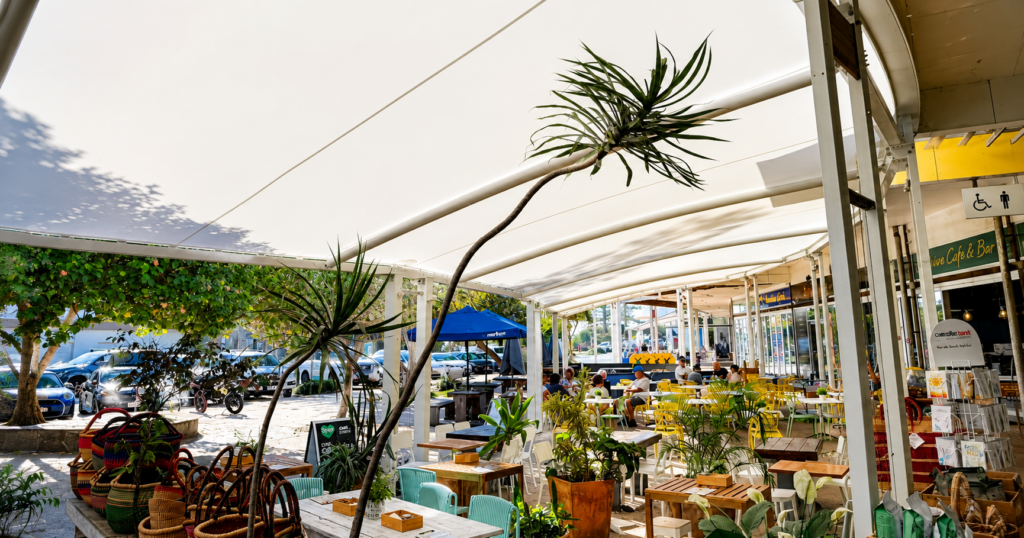
The retail and hospitality landscape in Australia is rapidly evolving. Traditional boundaries between indoor and outdoor spaces are fading as businesses shift from purely transactional experiences to more engaging, immersive environments. At the centre of this shift is the concept of the ‘Third Space’—a social environment outside of home (first space) and work (second space).
For retail centres, cafes, and childcare facilities, the challenge is to create these spaces in a way that remains functional in all weather conditions. This is where retractable and tensioned structures play a transformative role. By combining advanced materials with smart design, businesses can convert underused outdoor areas into valuable, year-round spaces.
The Rise of ‘Outdoor-In’ Design
Australia’s climate—especially in regions like Southeast Queensland—makes outdoor living highly appealing. However, unpredictable weather, from intense sun to sudden rain, often limits how these spaces can be used.
Retractable PVC systems and tensioned fabric structures provide a practical solution. Unlike fixed roofing, which can feel heavy and enclosed, these lightweight architectural fabrics allow natural light while offering full UV protection and waterproof coverage. This means spaces can quickly shift from open-air to fully sheltered, ensuring consistent usability regardless of weather.
Unlocking More Space and Revenue
Outdoor areas are often underutilised—too hot in summer, too exposed during rain, or only used seasonally. In a competitive market, this represents missed opportunity.
1. Increasing Customer Dwell Time
The longer customers stay, the more they tend to spend. Comfortable, shaded ‘Third Spaces’ encourage people to relax and linger. Whether it’s a shaded seating area in a shopping centre or an alfresco dining zone, weather-protected environments make customers more likely to stay longer—leading to increased spending.
2. Year-Round Functionality
Retractable systems offer unmatched flexibility. On pleasant days, spaces can remain open and airy. When conditions change, shade or shelter can be deployed instantly. This adaptability is especially valuable for hospitality businesses, enabling them to host events and serve customers consistently, regardless of weather.
Built for Australian Conditions
In commercial settings, visual appeal must go hand-in-hand with strong engineering. Australia’s standards for wind resistance and UV protection are among the toughest globally.
Wind Resistance Matters
In coastal and urban areas, strong winds can place stress on outdoor structures. High-quality systems are engineered to handle local wind conditions, using durable materials that maintain their shape and tension over time.
Advanced Fabric Technology
Modern materials like PTFE-coated glass fibre and premium PVC are designed for durability. They are resistant to UV damage, fire-retardant, and often self-cleaning. For businesses, this means lower maintenance costs and long-lasting visual appeal.
Strengthening Brand Identity Through Design
Shade structures are no longer just functional—they are a key part of a brand’s identity. Tensioned designs can be customised into striking shapes, creating a unique architectural feature.
Customisation also extends to colours, patterns, and branding. Logos and brand elements can be printed directly onto the fabric. At night, illuminated structures can act as eye-catching features, enhancing visibility and attracting visitors. These visually appealing spaces are also highly shareable on social media, helping businesses gain organic exposure.
Applications Beyond Retail: Childcare and Education
The ‘Third Space’ concept is equally valuable in childcare and education. Outdoor play areas are essential, but strict sun protection requirements often limit their use.
By installing large tensioned structures, childcare centres can create safe, all-weather play environments. Children can enjoy outdoor activities while being protected from harmful UV rays and rain. This improves daily operations and adds value for both the facility and parents.
The Business Case for Architectural Shade
Although high-quality retractable or tensioned structures require an upfront investment, the long-term benefits are significant:
- Increased Usable Space: Outdoor areas become functional all year, effectively expanding floor space without major construction.
- Energy Savings: Shading reduces heat inside buildings, lowering air conditioning costs.
- Higher Property Value: Well-designed, durable structures enhance the overall value of the property.
Conclusion
As urban spaces in Australia become more crowded, the importance of well-designed ‘Third Spaces’ will continue to grow. Businesses that transform their outdoor areas using retractable and tensioned structures will gain a clear competitive advantage.
The future of retail and hospitality lies in flexibility. By embracing adaptable design solutions, businesses can create comfortable, visually appealing, and highly functional spaces that meet modern customer expectations. Whether it’s a retractable roof for a rooftop venue or a bold canopy for a retail plaza, these solutions unlock the full potential of outdoor environments.