Versatile Structures

Shade structure fittings

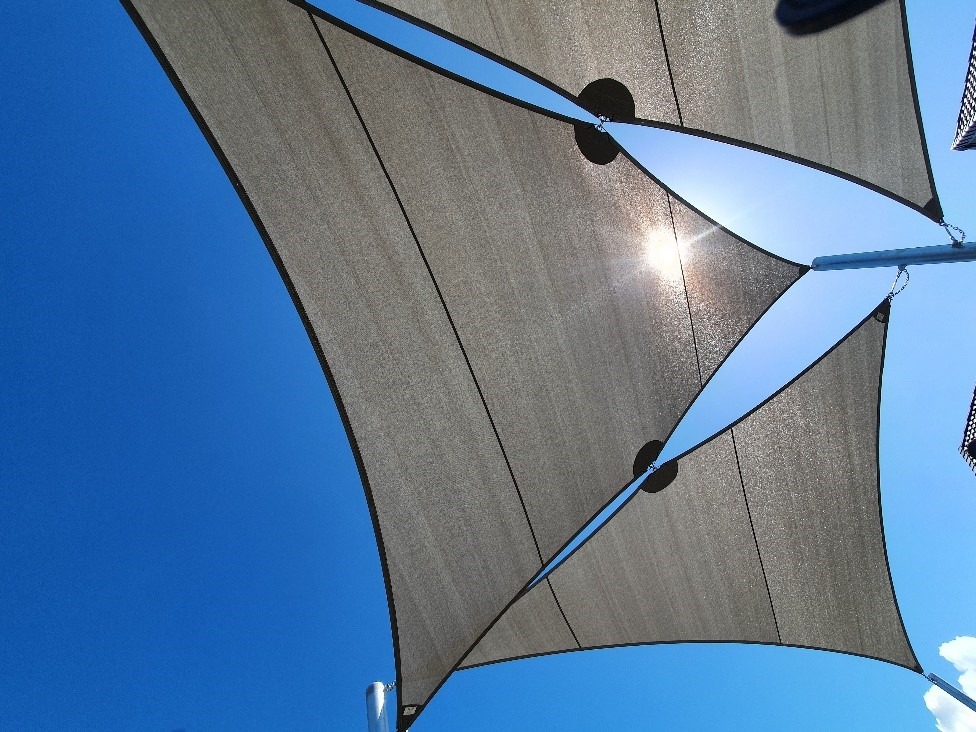
Ballina Shire Council shade structure installed by Versatile Structures

How to Choose the Right Shade Structure Material for Your Climate in South East Queensland

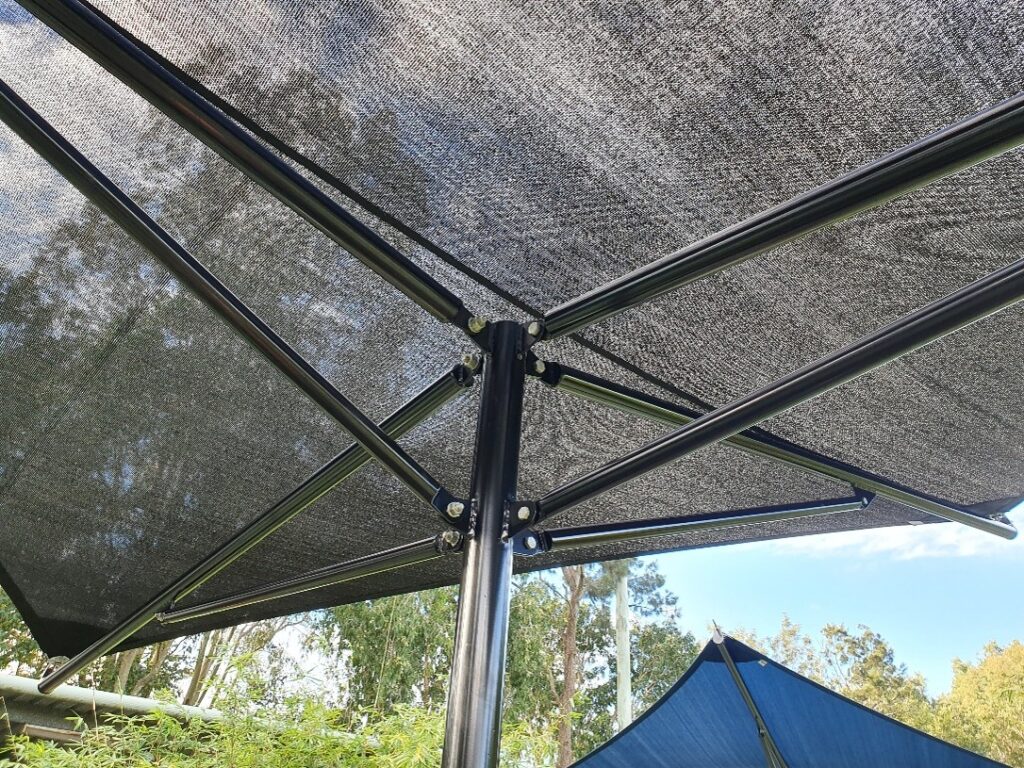
South East Queensland (SEQ) is renowned for its subtropical climate, characterized by hot, humid summers and mild winters. With the region’s high levels of sunshine and occasional severe weather events like thunderstorms and cyclones, choosing the right material for your shade structure is critical. A well-chosen shade structure not only provides comfort and protection but also enhances the durability and longevity of your investment. This article delves into the factors you should consider when selecting the best material for your shade structure in SEQ. Understanding the SEQ Climate Before diving into material options, it’s important to understand the specific climatic conditions of South East Queensland: Sun Intensity: SEQ experiences some of the highest levels of solar radiation in Australia, making UV protection a key consideration for shade structures. Humidity and Rainfall: The region has high humidity levels, especially in summer, and experiences significant rainfall, often in the form of intense storms. Wind Speeds: Strong winds, sometimes reaching cyclone levels, are not uncommon, particularly in coastal areas. Temperature Variations: Summers are hot and humid, with temperatures often exceeding 30°C, while winters are mild with temperatures ranging from 10°C to 21°C. Given these conditions, the material you choose must be resilient to intense sunlight, humidity, and wind, while also providing adequate shade and cooling. Common Materials for Shade Structures in SEQ Here are the most commonly used materials for shade structures in SEQ, each with its advantages and considerations: High-Density Polyethylene (HDPE) Shade Cloth UV Protection: HDPE shade cloth is widely popular in SEQ due to its excellent UV protection, blocking up to 98% of harmful UV rays. This makes it ideal for playgrounds, car parks, and outdoor seating areas where people spend extended periods. Durability: HDPE is resistant to mould, mildew, and rot, which is crucial in SEQ’s humid environment. It’s also engineered to withstand strong winds, making it suitable for coastal areas. Breathability: One of the key benefits of HDPE is its breathability, allowing heat to escape and providing a cooler shaded area. This is essential during SEQ’s hot summers. Maintenance: HDPE requires minimal maintenance, typically needing only occasional cleaning to remove dirt and debris. Polycarbonate Panels UV Protection: Polycarbonate panels offer excellent UV resistance, blocking almost all UV rays while allowing natural light to filter through. This material is ideal for patios, pergolas, and commercial outdoor spaces where both light and protection are desired. Impact Resistance: Polycarbonate is known for its impact resistance, making it a good choice in areas prone to hail or falling debris during storms. Weather Resistance: It withstands SEQ’s extreme weather conditions, including high winds and heavy rainfall, without warping or cracking. Insulation: Polycarbonate panels provide better insulation compared to shade cloth, keeping the area cooler in summer and warmer in winter, though they may retain more heat than fabric options. PVC (Polyvinyl Chloride) Coated Fabrics Waterproofing: PVC-coated fabrics are waterproof, making them ideal for all-weather shade structures, such as car parks, outdoor dining areas, and industrial applications. They offer excellent protection from SEQ’s frequent summer storms. UV Protection: PVC fabrics provide high levels of UV protection and are available in various thicknesses and colours to suit different needs. Durability: PVC is highly durable, resistant to tearing, and has a longer lifespan than standard shade cloth, although it can be less breathable, which might result in higher temperatures under the structure. Maintenance: While PVC fabrics are easy to clean, they may require more frequent maintenance to prevent discolouration or wear, especially in highly exposed areas. Aluminium and Steel Frameworks Structural Integrity: The choice of framework is as important as the shading material itself. Aluminium and steel are commonly used in SEQ for their strength and ability to withstand high wind speeds. Corrosion Resistance: Aluminium is naturally resistant to corrosion, making it suitable for coastal environments. Steel, when properly treated and coated, also offers excellent corrosion resistance and is often used for larger structures. Design Flexibility: Both materials offer design flexibility, allowing for customized shapes and sizes to fit specific site requirements. Factors to Consider When Choosing the Right Material When selecting the right material for your shade structure in SEQ, consider the following factors: Location For coastal areas, materials that resist salt corrosion, like aluminium frameworks and HDPE shade cloth, are ideal. In areas prone to cyclones or strong winds, polycarbonate panels or reinforced PVC fabrics with a sturdy steel framework may be more suitable. Purpose Consider what you need the shade structure for. If it’s for a car park, waterproof PVC-coated fabrics or polycarbonate panels might be best. For playgrounds or parks, breathable HDPE shade cloth is a popular choice. Aesthetic Appeal The material should complement the surrounding environment. Polycarbonate panels offer a modern, sleek look, while HDPE shade cloths come in various colours and can be tailored to match the aesthetic of the area. Budget Budget is always a key factor. HDPE shade cloth is generally more affordable than polycarbonate or PVC, but it may not offer the same level of protection or durability. Investing in a higher-end material could save on maintenance and replacement costs in the long term. Maintenance Consider the maintenance requirements of each material. HDPE and polycarbonate require less frequent maintenance compared to PVC-coated fabrics, which may need regular cleaning and checks for wear. Why Professional Installation Matters Choosing the right material is just the first step; professional installation is crucial to ensure the structure’s safety and longevity as can be seen for this completed project for Logan Village Green. In SEQ, where weather conditions can be extreme, professional installers will ensure that the shade structure is designed and anchored correctly to withstand local conditions. Experienced installers can also provide valuable advice on material selection based on the specific site and intended use, ensuring that the structure meets both functional and aesthetic needs. Conclusion Selecting the right material for your shade structure in South East Queensland involves balancing UV protection, durability, weather resistance, and aesthetic appeal. HDPE shade cloth, polycarbonate panels, PVC-coated fabrics, and robust frameworks like aluminium

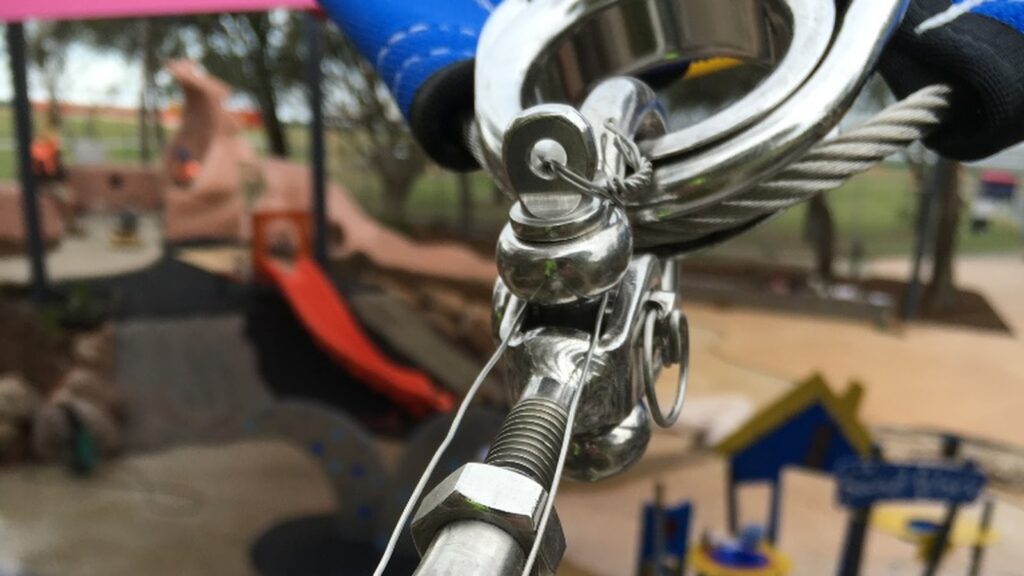
Marine grade shade structure fittings used by Versatile Structures

Using high quality shade structure hardware is key

Fittings hardware are easily overlooked when it comes to shade structures as the colourful shade fabrics and architectural designs are always first to catch the eye. Some people may take note of the structural steelwork that supports the shade structure frame, but only a handful will notice what hardware and fittings are used from nuts, bolts, and shackles, to turnbuckles, wire rope, hooks, and more. As important as it is to choose a shade fabric that is fire resistant and offers high UVR protection, it is equally as important to choose quality shade structure fittings and hardware, as these are the ‘glue’ in the connection points that hold the structure together. It is crucial that the fittings used for a shade structure have all the same features as being highly fire and UV resistant, but they also need to be corrosion resistant, rust proof and able to withstand immense tension and pressure. A tiny turnbuckle needs to withstand hundreds of kilograms of structural load, exacerbated by 100km/h coastal winds saturated with sea salt. Hardware typically is available in 316 and 304 grade stainless steel and 8.8 structural and 4.6 regular grade galvanized steel. The size and shape of the hardware needed are determined by structural loads and tensioned membrane requirements, consisting of steel cabled hems with threaded end fittings. Versatile Structures uses forged AISI 316 marine grade stainless steel fittings, Hilti branded chemset bolts and wire rope to ensure for strong corrosion free fittings that stand the test of time. Sail Corner Fixings: A key element in addition to using marine grade stainless steel, is encasing the 316 stainless-steel sail wire in a double folded pocket with corner reinforcement using a double layered of shade structure fabric and seatbelt webbing that not only protects the already super strong marine grade steal but also adds to the overall strength of the shade structure. We use 316 stainless-steel in all our sale corner fixings because it is stronger, lasts longer and looks great. Steel Welding Quality: All our steel is welded by our expert team of boilermakers at our factory in Wacol, Queensland which means we are in control of the process and the quality of our output. Stitching: All stitching is GORE ® TENARA ® Sewing Thread, a long-lasting UVR protected threat, performed using a double locking stitch. Conventional seam threads on shade sails and other outdoor fabric products suffer from exposure to UVR, wind, and weather and become brittle and break after a few years. In contrast, GORE ® TENARA ® Sewing Thread is a thread on which you can really rely. It does not deteriorate from exposure to elements – not even when exposed to UV radiation! Shade structure fittings like turnbuckles are furthermore coated in anti-seize to ensure easy removal should you decide to change the colour of a shade structure or if the shade structure needs repair from say a car driving into shade structure. Making sure your shade structure supplier uses quality fittings is a sure way for you to ensure a return on your investment.

Scroll to Top