
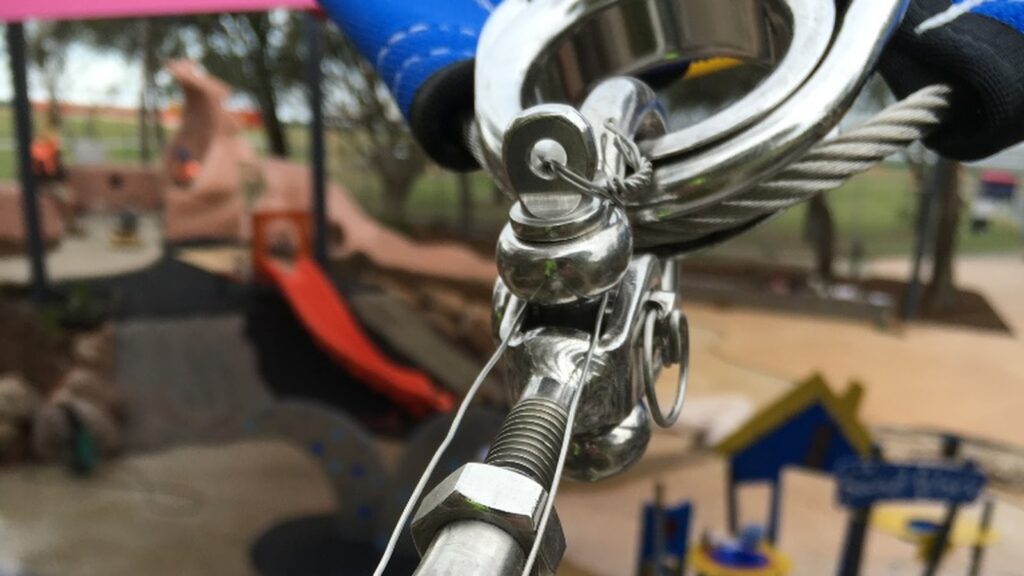
Executive Summary: Material Selection for Coastal Structural Integrity
In coastal environments like Brisbane, Noosa, and the Sunshine Coast, commercial waterproof shade structures and tensioned membranes face extreme atmospheric challenges. While architectural focus often lands on the primary canopy, long-term structural integrity relies entirely on the connection hardware. Selecting Marine-Grade 316 Stainless Steel over standard alternatives is the critical engineering factor that prevents catastrophic failure from salt spray, intense humidity, and extreme regional wind loads.
1. Material Comparison: Grade 304 vs. Marine-Grade 316 Stainless Steel
Standard steel and lower-grade stainless steels (such as Grade 304) lack the chemical resilience required for coastal Queensland installations. Exposure to salt-laden air causes tea staining (surface oxidation), which rapidly accelerates into deep structural pitting and crevice corrosion.
The following table outlines the structural differences and material compositions defining coastal suitability:
| Material Grade | Key Alloying Elements | Coastal / Marine Suitability | Primary Failure Risks in Coastal Settings |
| Grade 304 Stainless Steel | 18% Chromium, 8% Nickel | Low (Suitable for inland environments only) | Rapid tea staining, severe localized pitting, crevice corrosion, and premature structural failure. |
| Grade 316 Stainless Steel | 16% Chromium, 10% Nickel, 2% Molybdenum | High (Engineered for marine and coastal environments) | Highly resistant to chloride pitting; maintains rated tensile strength under sustained dynamic loads. |
Engineering Fact: The inclusion of 2% Molybdenum in Grade 316 stainless steel alters its chemical resistance, providing specific protection against chloride-induced pitting. This makes it a non-negotiable requirement for weather-resistant shade structures in Queensland.
2. Dynamic Load Distribution & Shade Structure Engineering
Large-scale commercial fabric structures function as dynamic tensile sails rather than static covers. High-velocity coastal winds generate immense lifting and shearing forces that must be safely transferred from the membrane down to the reinforced concrete footings.
High-load Marine-Grade 316 hardware (including rigging screws, turnbuckles, shackles, and custom heavy-duty pad plates) executes three critical structural functions:
- Dynamic Force Distribution: Heavy-duty turnbuckles and rigging screws maintain precise membrane tension parameters, preventing fabric whipping and material fatigue during storm events.
- Eliminating Rigid Failure Points: High-tensile jaw-and-jaw swivels allow for micro-movements, distributing concentrated wind gusts and preventing sudden shear fractures at rigid joints.
- Optimizing Membrane Lifespan: Correct, sustained tensioning reduces internal friction wear and eliminates fabric sagging, which prevents destructive water pooling during high-volume downpours.
3. Australian Standards and Building Compliance (AS/NZS 1170)
Asset owners, school boards, and commercial developers in Queensland must comply with strict structural regulations. Every architectural canopy project must adhere to the AS/NZS 1170 structural design actions standard, which regulates regional wind and cyclonic load requirements.
The structural load path of a compliant tensile structure follows a strict, unbroken hierarchy:
Wind force/ Cyclonic gusts ⟶ Premium waterproof tensile membrane
Compliance Risks with Substandard Hardware
- Invalidated Certification: Utilizing non-rated, non-traced, or substandard imported fittings completely invalidates structural engineering compliance certificates.
- Public Liability Exposure: Uncertified connection points leave commercial properties exposed to significant public liability risks in the event of a structural failure.
- Traceability: Compliant construction requires verifiable load ratings and full material traceability for every single connecting shackle, pin, and turnbuckle.
4. Commercial Asset Durability and ROI Analysis
For property asset managers overseeing shopping centre commercial shade structures, school sports court covers, or car park infrastructure, initial hardware procurement directly dictates long-term maintenance overheads.
Specifying premium electropolished Marine-Grade 316 hardware delivers distinct commercial advantages:
- Extended Service Life: Grade 316 hardware matches or exceeds the operational lifespan of premium architectural PVC or HDPE fabrics, ensuring the entire asset ages uniformly.
- Reduced Lifecycle Overhead: High-grade components eliminate the need for mid-lifecycle hardware replacement, avoiding the high costs of specialized access equipment (boom lifts), rigging crews, and operational closures.
- Asset Aesthetics: Electropolished stainless steel resists corrosion completely, preventing unsightly rust streaks from staining white fabric membranes or running down concrete support columns, thereby preserving the premium visual appeal of the commercial property.
Technical Specifications & Consultation
Engineering resilient shading solutions for the Australian climate requires localized expertise that balances architectural design with rigid structural survival frameworks.
For comprehensive project calculations, tensile membrane structures engineering, and AS/NZS 1170 compliant design, contact the Brisbane-based engineering and project management team at Versatile Structures. We design, engineer, and manufacture custom architectural solutions utilizing certified, fully traceable marine-grade componentry to ensure long-term asset durability.