
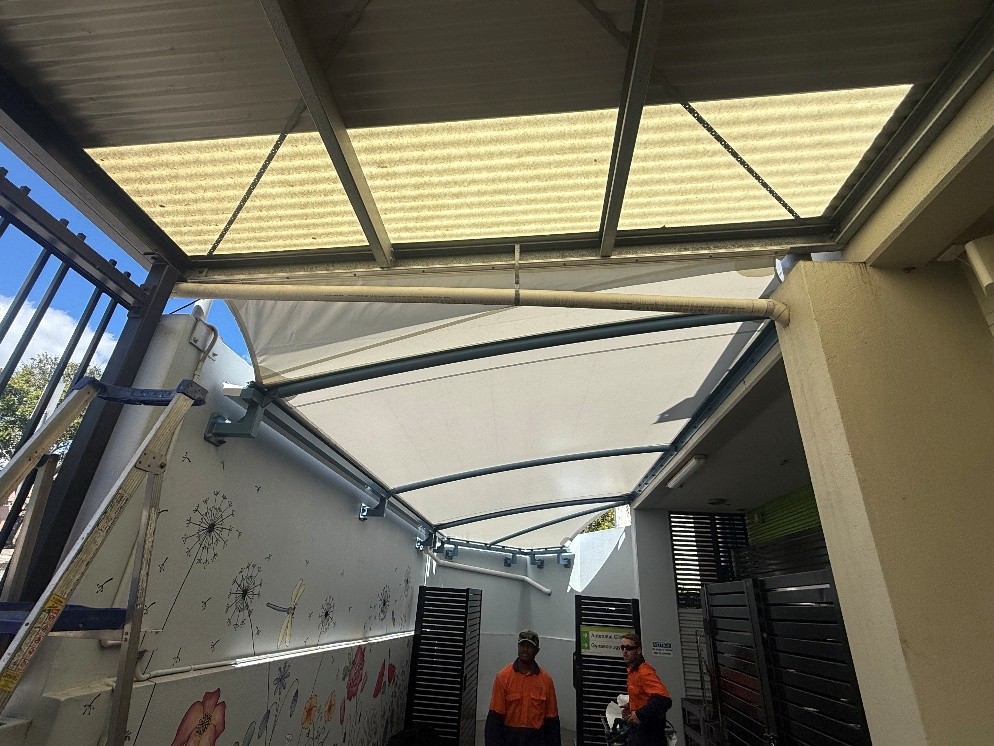
The traditional boundary between indoor and outdoor commercial space has completely dissolved across Australia. Modern architects, developers, and property managers no longer view outer courtyards or setback areas as low-value filler. Instead, they see them as high-yield business assets.
This change is driven by a massive shift toward biophilic design—the practice of connecting people closer to the natural environment. However, a premium outdoor workspace requires much more than just throwing a few tables onto a patio. It takes high-end engineering, weather proofing, and structural permanence.
1. High Returns on Investment & Long Dwell Times
In commercial real estate, every square meter needs to justify its cost. Unprotected rooftops and courtyards traditionally represented a financial loss because intense UV rays, heatwaves, and sudden downpours left them completely empty for large chunks of the year.
By adding custom-engineered fabric structures, you create comfortable microclimates that increase your usable square footage without the massive cost of a traditional brick-and-mortar building extension.
Boosting Dwell Time and Hospitality Yields
- Comfort Equals Revenue: If customers are comfortable, they stay longer and spend more money.
- Beating the Heat: High-performance tensile membranes, cantilever shades, and waterproof roofs slash ambient temperatures.
- All-Day Utility: Staff and visitors can comfortably take lunch breaks, run meetings, or work remotely outside—even in mid-afternoon summer heat.
Elevating Commercial Lease Value
- A Premium Differentiator: Sophisticated outdoor workspaces make commercial B2B office buildings stand out to top-tier corporate tenants.
- Employee Wellness: Tenants expect flexible work setups that focus on staff health.
- Flexible Spatial Layouts: A beautifully built outdoor pavilion acts as a secondary boardroom, a breakout zone, or an upscale corporate event venue, allowing landlords to command higher rent premiums.
2. Beating the Urban Heat Island Effect
Urban commercial centers struggle heavily with the heat island effect, where dark concrete and asphalt absorb solar radiation and bake the surrounding area. Putting up a standard metal roof can actually trap this heat underneath, turning a courtyard into an oven.
Architectural fabric structures fix this problem entirely. Advanced treated PVC and PTFE membranes feature unique thermal properties:
- High Solar Reflectance: The fabrics bounce the vast majority of solar radiation away, stopping heat from building up underneath.
- Optimized Luminous Transmittance: They filter natural light to block 100% of harmful UV rays. This creates glare-free light that keeps laptop screens readable while removing the need for artificial lighting.
- Residual Air Movement: The sweeping geometric lines of tensile structures feature open sides. This design encourages cross-ventilation, dropping the perceived temperature beneath the canopy by up to 10°C compared to open pavement.
3. Navigating Building Codes and Australian Standards
You cannot rely on temporary umbrellas or generic pop-up kits for commercial properties. Permanent structures must be treated as serious capital assets that comply fully with local planning laws and the National Construction Code (NCC).
When specifying a permanent outdoor structure, three main compliance criteria must be prioritized:
- Wind Load Engineering (AS/NZS 1170.2): Urban wind tunnels between high-rises and intense coastal winds create heavy uplift forces. Commercial structures require custom engineering and 3D wind-load modeling to ensure the steel foundations and tensioned cables can handle the pressure.
- Fire Retardancy and Safety (AS 1530): Any material added to a commercial site must pass strict fire testing. Premium architectural membranes are inherently self-extinguishing and fully match AS 1530 Part 2 and Part 3 standards.
- Water Management and Drainage: NCC guidelines state that a permanent structure cannot dump uncontrolled stormwater onto public walkways or neighboring boundaries. Custom structures solve this by hiding internal drainage systems right inside the structural steel columns, neatly routing heavy rain straight into stormwater networks.
4. Custom Fabricated Steel vs. Off-the-Shelf Kits
While standard modular kits seem like a quick, cheap fix, they consistently fall short in high-end commercial architecture.
| Feature | Custom Fabricated Steel & Membranes | Off-The-Shelf Modular Kits |
| Structural Span | Massive: Wide clear-spans without intrusive center pillars. | Limited: Narrow widths requiring dense, disruptive support posts. |
| Design Flexibility | Infinite: Geometric forms like cantilevers, hyperbolic shapes, and barrel vaults. | Rigid: Standard, blocky rectangular or square footprints. |
| Material Quality | Heavy-Duty: Australian structural steel with corrosion-resistant coatings. | Lightweight: Thinner, basic metals prone to early wear and rust. |
| Lifespan | 20+ Years: Engineered to last decades with minimal maintenance. | 3–5 Years: Quick fabric fading, structural wear, and frequent replacement. |
The Post-Free Advantage: Choosing a custom-engineered cantilever structure allows architects to keep ground surfaces completely free of vertical posts. This keeps pathways clear for outdoor dining layouts, vehicle transit lanes, and school assembly spaces.
Conclusion
Integrating permanent, high-performance outdoor covered structures is no longer an afterthought—it is a core element of smart commercial master planning. By treating the outdoor environment as a natural extension of the building’s interior, you unlock hidden financial value, elevate your property’s aesthetic, and build a highly resilient footprint for the future.