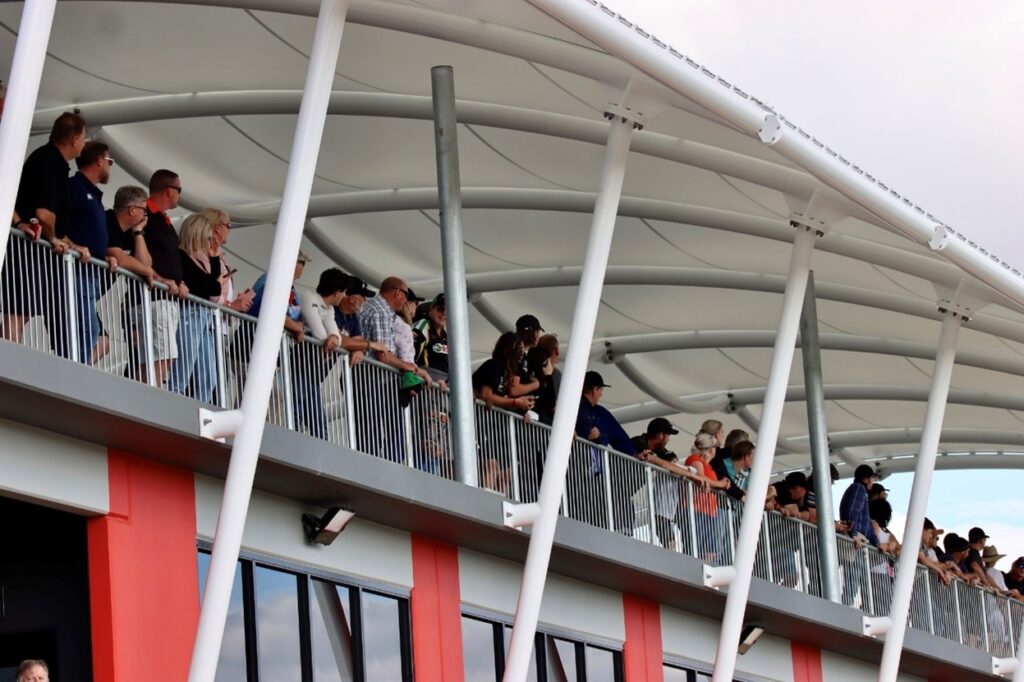
As we move into 2026, shade structures are no longer viewed as purely functional assets. I’m seeing a clear shift across Queensland and beyond: commercial shade structures are now architectural statements, sustainability tools and long-term investments rolled into one. Clients are asking smarter questions, architects are pushing creative boundaries, and councils and developers are demanding solutions that perform under extreme weather while enhancing the built environment.
Here are the key shade structure design trends shaping 2026, and why they matter for commercial, civic and hospitality spaces.
1. Shade Structures as Architecture, Not Add-Ons
One of the biggest changes I’m seeing is that shade structures are now being designed as part of the architecture, not something added after the fact. Tensile forms, steel-framed canopies and sculptural shade sails are being integrated into master plans from day one.
This approach is strongly influenced by the growing appreciation for the art and science behind shade design. Well-designed structures balance aesthetics, structural engineering, sun angles and wind loads — particularly critical in Queensland conditions.
Related reading: The Art and Science of Shade Structures
Architectural shade structures are increasingly being used to:
- Frame entrances and walkways
- Define outdoor zones in mixed-use developments
- Create visual identity for public spaces and destinations
This trend is well represented across award-winning projects in Queensland where shade solutions are now focal points rather than background elements.
Award-Winning Shade Solutions in Modern Architecture
2. Sustainable Shade Design Is Now Expected, Not Optional
Sustainability is no longer a “nice to have”. In 2026, it’s a baseline expectation — particularly for councils, schools and large commercial developments.
Modern shade structures are being designed to:
- Reduce heat load on buildings and hardscapes
- Improve thermal comfort in outdoor areas
- Lower reliance on mechanical cooling
Energy-efficient shade design plays a measurable role in reducing urban heat islands and improving occupant comfort in commercial precincts.
Energy-Efficient Shade Solutions for Commercial Buildings
There’s also a strong move towards:
- Long-life, recyclable materials
- High-performance shade fabrics with superior UV ratings
- Designs that minimise material waste while maximising coverage
This focus aligns closely with sustainable landscaping strategies now being adopted across South East Queensland.
Sustainable Shade Structures for Commercial Landscaping in QLD
3. Climate-Responsive Design for Queensland Conditions
Designing for Queensland in 2026 means designing for extremes. Heat, UV exposure, intense rainfall and cyclonic winds all influence how modern shade structures are engineered.
The trend is moving away from “one-size-fits-all” solutions toward climate-responsive shade design, where structures are customised based on:
- Site orientation
- Local wind regions
- Seasonal sun paths
- Intended use of the space
This is especially critical for coastal and high-exposure sites, where durability and structural integrity are non-negotiable.
Weather-Resistant Shade Structures for Queensland’s Climate
Car park shade structures are a great example. In 2026, they’re being designed not just to provide shade, but to protect vehicles, reduce surface temperatures and withstand severe weather events.
Cost-Benefit Analysis of Car Park Shade Structures
4. Multi-Functional Shade Structures (More Than Just Shade)
Another clear trend is multi-functionality. Shade structures are increasingly expected to do more than block the sun.
In commercial and public environments, I’m seeing shade structures designed to:
- Integrate lighting, wayfinding or signage
- Support branding and placemaking
- Define zones for dining, play or events
This is particularly relevant in retail, hospitality and mixed-use spaces where dwell time and experience directly impact revenue.
Shade Structures Increase Retail Dwell Time & Sales
Branded shade solutions, including umbrellas and canopy systems, are becoming a powerful extension of visual identity.
Branded Commercial Umbrellas
Crafting Shade and Signage Structures
5. Smarter Materials and Advanced Fabric Technology
Material innovation continues to drive shade structure design in 2026. High-performance fabrics and advanced structural materials are allowing for lighter, stronger and more visually striking designs.
Key material trends include:
- Architectural-grade shade fabrics with extended warranties
- Polycarbonate roofing for waterproof and semi-transparent applications
- Corrosion-resistant steel and aluminium for coastal environments
Polycarbonate solutions, in particular, are being used where weather protection is just as important as solar control.
Why Polycarbonate Roof Panels Are a Versatile Shading Solution
These materials support designs that are both visually refined and engineered for longevity — a key consideration for asset owners looking at lifecycle value.
6. Award-Winning Innovation Is Setting the Benchmark
Innovation in shade structure design is being driven by award-winning projects that push both creative and technical boundaries. These projects are influencing expectations across the industry.
From major public spaces to landmark commercial developments, award-winning shade structures demonstrate:
- What’s possible when design and engineering align
- How shade can elevate public experience
- Why quality design delivers long-term value
Award-Winning Innovation in Shade Design – Queensland Projects
Design & Manufacturing Award-Winning Shade Structures
For clients, these projects provide confidence that contemporary shade structures can be both bold and practical.
7. From Concept to Completion: A More Integrated Process
Finally, 2026 is seeing a more integrated approach to delivering shade structures. Clients want fewer handovers, clearer accountability and smoother delivery from concept through to installation.
This has driven a stronger focus on:
- End-to-end project management
- Early collaboration with architects and builders
- Clear engineering documentation and compliance
From Concept to Completion: Commercial Shade Structure Installation
This integrated approach not only improves outcomes but also reduces risk, delays and unexpected costs.
Looking Ahead
The design trends shaping shade structures in 2026 reflect a broader shift in how outdoor spaces are valued. Shade is no longer an afterthought — it’s a strategic asset that supports sustainability, comfort, branding and architectural excellence.
As expectations continue to rise, the most successful projects will be those that embrace innovation, climate-responsive design and long-term performance from the outset.
If there’s one takeaway, it’s this: great shade design is no longer just about coverage — it’s about creating better places to live, work and gather.